
Spring doesn’t ease into a golf course. It arrives all at once when dormant Bermuda breaks, growth rates triple, and golfers show up expecting championship conditions, even as the turf is just waking up. The courses that handle that transition well are not the ones with the biggest maintenance budgets. They are the ones with the right equipment, maintained on the right schedule and operated by people who know how to use it.
That last part matters more than most owners realize. A $70,000 mower in the hands of an undertrained crew does less for your course than a well-maintained mid-range unit operated by someone who understands mowing height, moisture, and turf stress. Golf course equipment is only as good as the program built around it.
Here are the 10 pieces of equipment that can help separate a course fighting through spring from one that is ready for it.
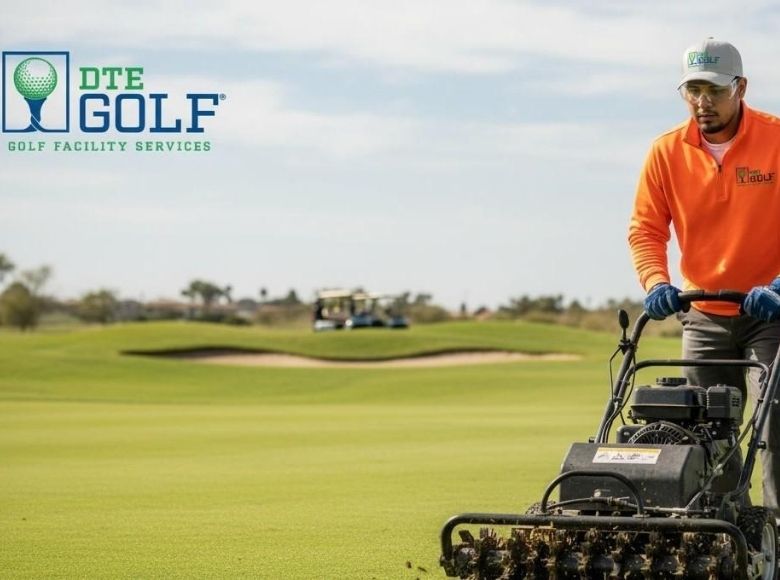
1. Precision Fairway Mowers
Fairway conditioning sets the tone for the entire round. Mowers with adjustable reel speeds and consistent cutting heights help prevent scalping on uneven terrain, which is one of the fastest ways to invite disease into stressed spring turf.
2. Greens Mowers With Groomer Attachments
Greens are unforgiving. A groomer attachment helps stand up grain before the cut, producing truer roll and faster recovery from winter dormancy. This is the difference golfers can actually feel under their putters.
3. Aerators (Core and Deep-Tine)
Spring aeration relieves compaction built up over a dormant season and opens channels for oxygen, water, and nutrients to reach the root zone. Skipping this step is one of the most common reasons turf struggles throughout the summer.
4. Topdressers
Applying sand topdressing after aeration smooths surfaces, manages thatch, and speeds healing. Courses that pair aeration with proper topdressing typically see faster green recovery and firmer playing conditions within weeks.
5. Irrigation Systems and Controllers
Water is the input that makes or breaks every other maintenance decision. Modern, zone-controlled irrigation systems can adjust for soil type, slope, and turfgrass species, which matters enormously across Florida golf course properties managing everything from Bermuda fairways to bentgrass greens.
6. Sprayers (Boom and Turf)
Calibrated sprayers ensure fertilizer, pre-emergent herbicide, and fungicide are applied evenly. Uneven application is a quiet problem—it does not show up immediately, but it eventually appears as streaky turf and wasted product.
7. Bunker Rakes and Groomers
Bunkers take a beating over winter. Mechanical rakes restore consistent sand depth and edges quickly each spring, while regular grooming afterward helps keep playability consistent for golfers throughout the season.
8. Utility Vehicles
Reliable utility vehicles keep crews moving efficiently across large properties, which becomes critical during the compressed spring window when dozens of tasks compete for the same daylight hours.
9. Verticutters
Vertical mowing removes thatch buildup and grain, encouraging upright growth and better ball contact. It is a smaller piece of equipment that can have an outsized effect on how a course plays once summer traffic picks up.
10. Diagnostic and Soil Testing Tools
This is one of the most overlooked categories on the list. Moisture meters, soil probes, and nutrient testing kits tell a maintenance team what a course actually needs instead of relying on assumptions based on last year’s program.
Reactive vs. Proactive Equipment Programs
Factor | Reactive Equipment Approach | Proactive Equipment Program |
Maintenance schedule | Repairs after breakdowns | Preventive servicing year-round |
Spring readiness | Scrambling in March | Equipment audited each winter |
Turf recovery time | Slower and inconsistent | Faster and more predictable |
Labor efficiency | Crews wait for broken units | Crews stay productive |
Long-term cost | Higher, driven by emergency repairs | Lower, driven by planned upkeep |
Industry Insight: Equipment Is a Program, Not a Purchase
One of the biggest mistakes golf course management teams make is treating equipment as a one-time capital decision rather than an ongoing program. A mower purchased five years ago with no calibration schedule, no blade-sharpening routine, and no operator training behind it is not really an asset anymore. It is a liability waiting to fail during the busiest week of the year.
Case Study: Turning Equipment Discipline Into Course Results
At Twin Rivers Golf Club in Central Florida, a full greens renovation project made clear how much equipment discipline matters to long-term outcomes. Rebuilding the greens with new TifEagle turf only worked because it was paired with properly calibrated aerators, topdressers, and irrigation equipment applied on a precise schedule during grow-in.
The course reopened with firmer, healthier putting surfaces and, more importantly, a golf maintenance program designed to protect that investment through the next dormant season and beyond, rather than losing ground as many courses do a year after a renovation.
Final Thoughts
Spring preparation is not about owning every piece of equipment on this list. It is about knowing which tools your course actually needs, keeping them properly maintained, and having a golf consulting partner who can build a maintenance calendar around them instead of reacting to whatever breaks first. The courses that get this right do not just survive spring. They carry that momentum through the entire playing season.
Frequently Asked Questions
What Golf Course Equipment Is Most Important for Spring Preparation?
Essential equipment for spring preparation includes precision fairway mowers, greens mowers, aerators, topdressers, irrigation systems, sprayers, bunker rakes, utility vehicles, verticutters, and diagnostic tools. The right combination depends on the course’s turf, maintenance requirements, and operating conditions.
How Often Should Golf Course Equipment Be Serviced?
Golf course equipment should be inspected and serviced according to the manufacturer’s recommendations and the intensity of use. High-use equipment such as mowers and sprayers may require more frequent inspections, calibration, sharpening, and preventive maintenance to maintain consistent performance.
Why Is Proper Equipment Calibration Important for Golf Course Maintenance?
Proper calibration ensures equipment performs consistently and applies materials or cuts turf accurately. Calibrated mowers help maintain uniform cutting heights, while calibrated sprayers help ensure even applications. Regular calibration can improve turf quality and reduce waste.
How Can the Right Golf Course Equipment Improve Maintenance Efficiency?
The right equipment allows maintenance crews to complete essential tasks more efficiently and consistently. Reliable machines reduce downtime, improve labor productivity, and help crews meet demanding maintenance schedules, especially during periods of rapid turf growth.
What Should Golf Courses Consider When Choosing New Equipment?
Golf courses should consider equipment reliability, turf requirements, property size, operator training, maintenance needs, fuel or energy efficiency, and long-term operating costs. Equipment should also fit into the course’s overall maintenance program rather than being selected based solely on purchase price.
Ready to Build a Smarter Golf Course Equipment Program? Contact Us Today!
If your course is heading into spring without a clear maintenance and equipment plan, now is the time to address it. DTE Golf® has spent more than 30 years helping Florida golf courses and properties across the Southeast pair the right equipment with the right expertise to deliver consistent, championship-level conditions.
Contact DTE Golf® today to talk with our golf course management team about a maintenance program built for your course, not a generic one pulled off the shelf.