
A greens mower doesn’t forgive mistakes. It exposes them. A quarter inch of bedknife wear, a reel drifted slightly out of adjustment, or one skipped daily inspection. That’s all it takes before the damage shows up as scalped edges, inconsistent ball roll, and members noticing the difference before the superintendent even walks the green. On the putting surface, you can’t hide a mistake. Precision starts long before the mower ever touches turf.
Key Takeaways
- A well-maintained greens mower protects turf health as much as it delivers a clean cut.
- Daily inspection habits prevent most costly mid-season breakdowns.
- Reel-to-bedknife adjustment is the highest-impact maintenance task.
- Proactive schedules outperform reactive repairs on both cost and course conditions.
Understanding Greens Mower Maintenance
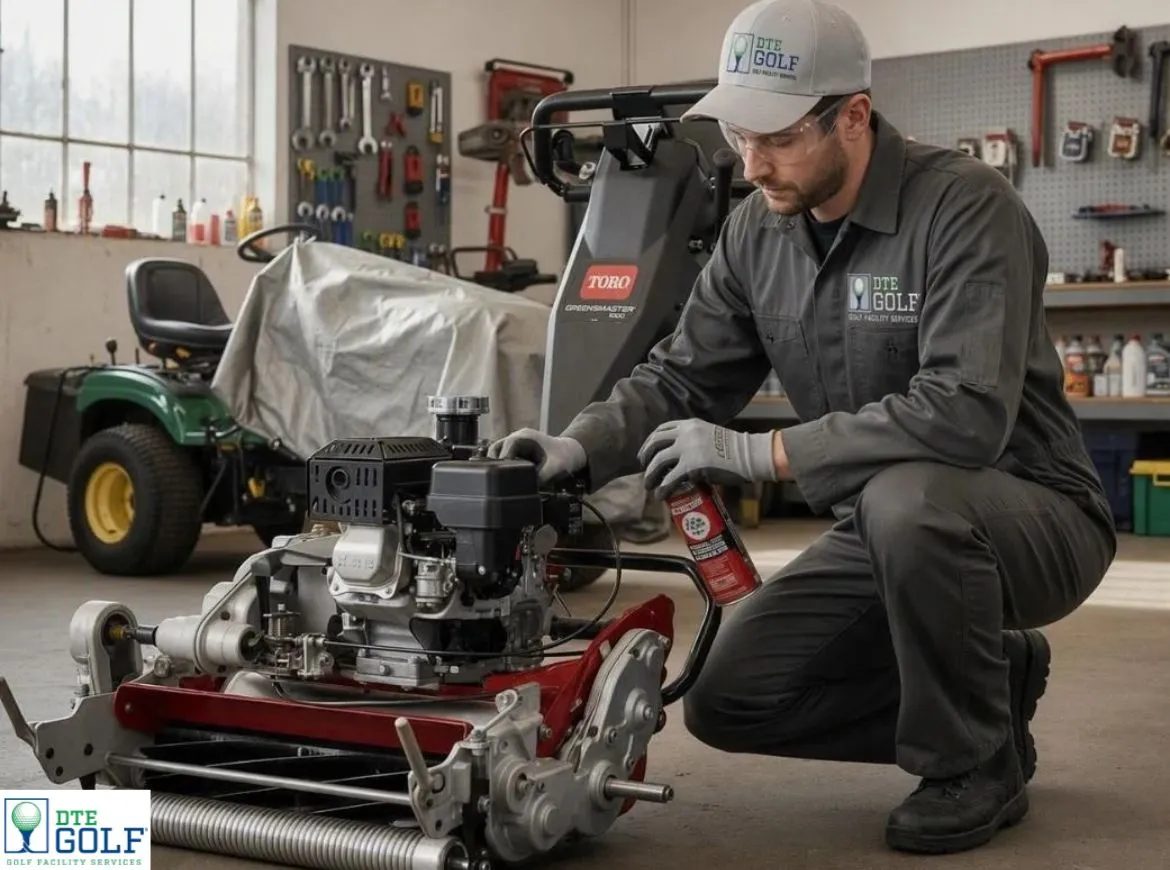
Greens mower maintenance is the routine of inspecting, adjusting, and servicing the walk-behind or triplex units used specifically on putting surfaces. It differs from fairway management, which uses different decks and cutting heights. It covers reel sharpness, bedknife contact, roller condition, hydraulic checks, and height-of-cut calibration, all aimed at protecting delicate golf course turf while producing a true, consistent cut.
Why Greens Mower Maintenance Matters
Golf course superintendents live with a hard truth: greens are the most scrutinized square footage on the property, and the mower is the single tool most responsible for how they play. A greens mower running even slightly out of adjustment doesn’t just look wrong. It stresses turf, opens the door to disease, and quietly drives up long-term repair costs across the fleet.
Maintenance By the Numbers
According to the USGA, golf courses typically run greens mowers about 1,000 hours per year. In comparison, a greens mower’s useful life is only around 4,000 hours, which means turnover and daily care both matter enormously to overall golf course maintenance budgets. That’s roughly a four-year clock ticking on every unit in the shed, and it makes the return on each operating hour especially important.
Reactive Versus Proactive Maintenance
Maintenance Level | Focus | Key Tasks | Time Required | Impact on Cut Quality |
Daily Check | Pre-mow inspection | Clean unit, check fluid levels, inspect reel-to-bedknife contact | 10 to 15 minutes | Catches issues before they reach the green |
Weekly Service | Adjustment and sharpness | Backlap or grind reels, torque checks, roller inspection | 45 to 60 minutes per unit | Maintains consistent height and true cut |
Seasonal Overhaul | Full mechanical reset | Full grind, hydraulic service, bedknife replacement | Several hours per unit | Resets equipment to like-new precision |
Case Study on Renovation and Turf Testing
When DTE Golf® managed the Twin Rivers greens renovation, the club converted to new TifEagle greens through a full strip-and-rebuild process, including a new mix, fumigation, and a careful grow-in phase involving spiking, verti-cutting, and topdressing.
New greens like these are especially unforgiving of poorly maintained mowers because a rough bedknife or uneven reel can undo months of grow-in progress in a single pass. Consistent greens mower upkeep helps protect that investment once the course reopens for play.
Best Practices for Greens Mower Maintenance
- Inspect reel-to-bedknife contact before every mow.
- Keep cutting units clean of clippings and debris after each use.
- Backlap regularly to maintain sharpness between grinds.
- Calibrate cut height with a gauge, not by eye.
- Check hydraulic lines and fittings for leaks weekly.
- Rotate mowers across the fleet to distribute wear evenly.
- Track hours per unit to plan grinds proactively.
- Store mowers in a climate-controlled, dry area.
- Train operators on proper turning technique to protect the reel.
- Log every service so wear patterns become visible over time.
How DTE Golf® Helps
DTE Golf® brings structured course management and equipment care into one program, so mower maintenance isn’t left to chance between renovations or peak-season stretches. From daily inspections to full-season planning, the team helps courses protect both their turf and their equipment investment.
Final Thoughts
A greens mower is only as good as the routine behind it. Courses that treat maintenance as a daily discipline, rather than an afterthought, consistently protect cut quality, extend equipment life, and give golfers the surfaces they expect.
FAQs
How does reel and bedknife alignment affect greens mower cutting precision?
Proper alignment creates a clean scissor cut instead of tearing or crushing grass blades. When contact is off, turf edges fray and heal poorly, leading to visible streaking and stress on the putting surface. Even slight misalignment compounds daily, degrading cut quality across the green.
What maintenance practices help prevent scalping and uneven mowing on golf course greens?
Regular height-of-cut calibration, consistent bedknife-to-reel contact checks, and proper roller adjustment all reduce scalping risk. Keeping mowers level and tires or rollers evenly worn also prevents dips that cause uneven cutting. Daily pre-mow inspections catch most of these issues early.
How frequently should greens mower reels be sharpened to maintain consistent turf quality?
Most courses backlap several times a week to keep the edge sharp between full grinds. A complete spin or relief grind is typically scheduled every one to two weeks during peak mowing season. Frequency should scale with hours logged and visible cut quality, not a fixed calendar alone.
How can mower height-of-cut calibration improve putting green consistency?
Accurate calibration ensures every pass cuts to the same height, which is essential for uniform ball roll. Using a gauge rather than eyeballing the setting removes human error. Consistent height also reduces turf stress by avoiding accidental scalping.
What mechanical issues should golf course managers inspect when greens mowers produce inconsistent cuts?
Check reel-to-bedknife contact first, since misalignment is the most common cause. Also inspect roller wear, hydraulic pressure, and tire condition, as uneven components can cause uneven cutting height. If problems persist after basic adjustments, rule out loose bearings or bent reels.
Ready to Protect Your Greens and Your Equipment Investment?
A greens mower running out of adjustment doesn’t just cost you in repairs. It costs you in turf health, playability, and the impression every golfer takes home. Courses that stay ahead of the curve treat maintenance as a program, not a patchwork of fixes.
Talk to DTE Golf® about building a maintenance program around precision, consistency, and long-term turf health, so your greens stay tournament-ready every day of the season, not just on the days you catch a problem in time.