
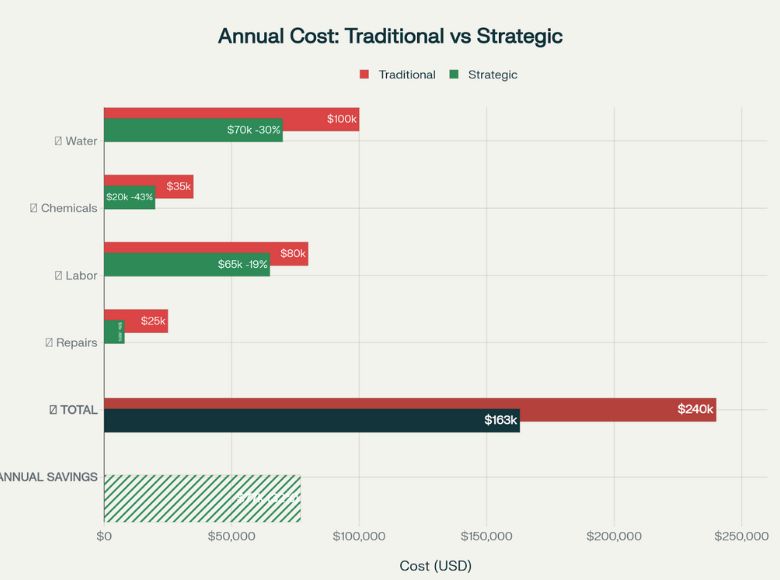
Even a single neglected fairway can cost a golf course more in one season than a full year of a proactively managed turf. If your golf course is investing on water, chemicals or repairs, the real threat is not climatic conditions. The real threat is lack of a proper golf turf management plan. Researches have shown that a well-planned golf turf maintenance can slash the costs by up to 40%.
The difference between thriving fairways and the fairways that can turn into financial disaster is “strategic golf turf management.” In an industry where water bills alone can be more than $100,000, strategizing and investing in proper golf care maintenance is not just about being smart. It is about survival in a competitive golf course market in Florida.

The True Cost of Poor Golf Turf Management
Golf course operators have a harsh reality to deal with. Total turf related expenses can take up 50-70% of the entire golf course budget. If a well-thought turfgrass management is not implemented, costs can go up. There can be untimely emergency repairs, excessive use of chemicals and premature renovations.
Poor golf maintenance can have serious complications. Compact soil can lead to drainage issues that can breed diseases. According to the Golf Course Superintendents Association of America, a single disease outbreak can cost about $15,000-$30,000 in treatment and recovery.
How Strategic Golf Turf Management Cuts Costs
1. Preventive Health Programs Reduce Chemical Dependency
Implementing (IPM) Integrated Pest Management as a part of comprehensive golf course management reduces the pesticide costs by 30-50%. Rather than calendar-based spraying, IPM focuses on monitoring and targeting treatments only when it is necessary.
The United States Golf Association puts a special emphasis on healthy golf turf management that can resist pests and diseases. If the turf is well-managed and has proper nutrition from time to time, then fungicide application can be cut down from 12-15 times per season to just 4-6 applications.
Cost Impact:
- Traditional chemical program: $25,000-$40,000 annually
- IPM-based approach: $15,000-$25,000 annually
- Savings Made: $10,000-$15,000 per year
2. Water Management Optimization Cuts Down on Utility Bills
Water is one of the biggest controllable expenses in golf turf management. Smart irrigation practices can cut down the water consumption up to 40% and the quality is not compromised.
Modern golf maintenance techniques include soil moisture sensors, drought resistant grass varieties and precision irrigation that targets only those areas where water is actually needed.
The Environmental Protection Agency’s WaterSense program reports that 15-20% of annual water costs can be saved when water efficient practices are adopted. This means a saving of $20,000-$30,000 on an average for an 18 hole facility.
Here’s a quick traditional vs Strategic Golf turf management
3. Soil Health Investment Prevents Costly Renovations
Healthy soil means a strong foundation of cost-effective turfgrass management. Regular soil testing and amendment programs can cost $3,000-$5,000 yearly but it prevents the need of renovation projects that exceed $200,000 per acre.
Top dressing, core-aeration and organic matter management can improve the soil structure, reduce compaction and enhance drainage. Also, these practices extend the average turf lifespan by 3-5 years and delays the expensive renovation cycles.
According to the Sports Turf Managers Association, the courses that invest in the soil health programs have 50% lesser emergency repairs and can save drastically in the long-run.
4. Precision Technology Reduces Input Costs
Modern golf course maintenance makes use of advanced technology to boost efficiency. GPS-guided mowers, drone monitoring, variable-rate fertilizer spreaders can reduce waste to a great extent and improve the results.
Technology ROI Examples:
- Precision fertilization: 25% reduction in fertilizer costs
- Automated irrigation: 30% labor savings
- Drone disease detection: Early intervention saving $10,000-$20,000 per outbreak
5. Grass Variety Selection Lowers Ongoing Maintenance
Choose only the appropriate grass varieties. It is the most impactful long-term decision that you can take in golf-turf management. Modern-day cultivars offer an enhanced disease resistance (need of fungicide is reduced by 40-60%). They also have lower water requirements and improved tolerance against wear and tear. Though transitioning to new grass varieties requires an upfront investment, courses recover the costs in just 2-3 years
Take The Smart Golf Turf Management Step Today
You do not need a huge capital investment to start a comprehensive golf turf management program. All you need to do is to begin with these steps
Immediate Actions:
- Conduct comprehensive soil testing ($500-$1,000)
- Calibrate irrigation system ($2,000-$3,000)
- Establish pest and disease monitoring protocols
- Review and optimize chemical application schedules
Annual Goals:
- Reduce water consumption by 15-20%
- Cut chemical applications by 25-30%
- Eliminate 80% of emergency repairs
- Extend equipment life through preventive maintenance
Know Before You Go
- Why is golf turf management important?
Golf turf management helps in several ways. It keeps the turf healthy, improves playability and prevents any costly damage. Strong turf management also protects revenue loss in several ways and maintains high golf course standards.
- How does turf management reduce maintenance costs?
Turf management reduces the maintenance costs to a great extent. It prevents diseases, reduces water consumption and avoids expensive emergency repairs too. A consistent care helps equipment last longer and minimizes the labor intensive fixes too.
- What turf practices lower long-term expenses?
Regular aeration, proper fertilization, efficient irrigation, and using resilient turf varieties all cut future costs. Early pest and disease detection also stops small issues from becoming major expenses.
- How can courses improve turf efficiency?
Smart irrigation systems, soil testing, and preventive maintenance improve performance while lowering waste. Data-driven turf programs also help superintendents allocate resources more effectively.
The Bottom Line:
Golf courses that adopt golf turf management strategy can easily outperform their competitors. Every dollar invested in the prevention of turf health gives twice or thrice the invested value. It is not just about immediate savings, it is about protecting an invaluable asset. Well-managed golf courses maintain property values, attract premium memberships so that devastating renovation expenses can be prevented.
Take Control of Your Golf Turf Management Today
Do not wait for the next crises to drain your budget. Your course deserves the financial benefits of professional golf course management. So start your journey to cut costs and get healthier turf now. Make a smart investment in professional golf turf maintenance today with DTEGolf®