
Do not think of it as just an inconvenience when a golf cart goes down. It means lost time, unhappy golfers, and lost revenue. A few hours of spring golf cart maintenance today can prevent weeks of downtime later.
Spring is the season of second chances, and your golf cart fleet deserves one too. When tee sheets fill up and rounds per cart increase, the pressure on every cart in your fleet multiplies.
Whether you manage a private club or a regional resort, your golf cart repair bills this summer will largely be determined by the decisions you make at the right time. Strong golf course management starts with equipment that performs on demand.
Here are the 10 most impactful spring maintenance steps every golf cart owner and golf course operator should follow in 2026 and beyond.
Tip 1: Inspect and Recondition the Battery System
Battery failure is one of the biggest causes of golf cart downtime. When a golf cart is stored during winter, electrolyte levels can drop, terminals may corrode, and cells can lose capacity.
Begin by cleaning all terminals with a baking soda solution and testing each battery individually with a load tester. For electric fleets, one weak cell can drag down the entire battery pack.
Replace any battery that reads below 80 percent capacity because the labor cost of a midsummer breakdown often exceeds the cost of this preventive step.
Tip 2: Check Tire Pressure and Tread Condition
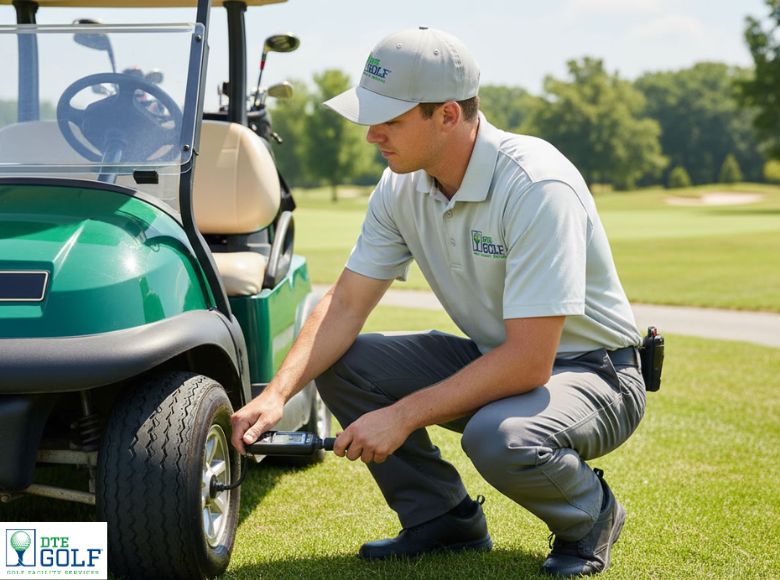
Proper tire inflation affects cart handling, turf impact, and energy efficiency. Underinflated tires increase rolling resistance and may contribute to turf compaction, which is a real concern for golf course maintenance teams working to protect spring recovery.
Inspect tread depth and sidewalls for cracks that may have developed during colder months. While ideal pressure is often between 18 and 22 PSI, always follow the manufacturer’s specifications for your model.
For industry best practices on turf and equipment maintenance, refer to the United States Golf Association.
Spring Maintenance Quick Reference Checklist
Component | Check Interval | Warning Sign | Action |
Batteries (Electric) | Monthly | Slow acceleration, short range | Load test; replace if below 80% |
Tires | Weekly | Cracking, low PSI | Inflate or replace |
Brake System | Start of season | Spongy pedal, cart drifts | Adjust or replace pads/cables |
Fuel System (Gas) | Start of season | Hard start, rough idle | Add fresh fuel, clean carburetor |
Steering | Monthly | Loose handling, pulls to one side | Inspect tie rods and alignment |
Lights and Signals | Weekly | Dim or nonfunctional | Replace bulbs or wiring |
Charger (Electric) | Start of season | No charge indication | Test output voltage |
Cables and Wiring | Start of season | Fraying, corrosion | Replace immediately |
Tip 3: Flush and Inspect the Brake System
Brake cables and pads can degrade over winter, especially in humid climates. Test each cart individually on a slight incline to evaluate brake performance.
Any cart that drifts or has a spongy pedal response should be removed from service immediately. Brake failure on a golf course with slopes, bunkers, and water features is a serious safety risk.
This step is non-negotiable for any professional golf course management operation.
Tip 4: Service the Fuel System (Gas Carts)
Old or contaminated fuel left in a gas cart during winter can cause buildup in the carburetor and fuel lines.
Drain residual fuel, clean the carburetor, replace the fuel filter, and run the engine with fresh fuel before returning the cart to service.
A rough idle or hard start is often the first sign that the carburetor needs attention. Address it now, not during the busiest weekend of the season.
Tip 5: Lubricate All Moving Parts
Steering columns, wheel bearings, brake cables, and chassis pivot points all need fresh lubrication after winter.
Dry components accelerate wear, increase the risk of failure, and may cause steering issues that are dangerous on hills and cart paths.
Use only manufacturer-approved grease and pay close attention to components exposed to moisture.
Cost Impact: Preventive vs. Reactive Maintenance (Per Cart, Annually)
- Preventive spring maintenance: approximately $180
- Midsummer golf cart repair average: approximately $480
- Emergency replacement rental per week: approximately $820
Preventive maintenance often pays for itself with the first avoided repair.
Golf management professionals know the truth: the carts that fail first are usually the ones that seemed fine last season.
Tip 6: Test and Calibrate the Charger (Electric Carts)
A faulty onboard charger can undercharge batteries and shorten their lifespan dramatically.
Test each charger’s output voltage before the season begins. Many batteries replaced prematurely were actually damaged by chargers delivering 10 to 15 percent below specifications.
For large municipal fleets, a charging system audit can save thousands in unnecessary battery replacement costs.
For equipment safety and maintenance standards, refer to the Occupational Safety and Health Administration.
Tip 7: Inspect Lighting and Cables for Corrosion
Rodents, moisture, and salt exposure can damage wiring during winter.
Inspect for fraying, brittle insulation, and corrosion at all connection points. A compromised wire in the main circuit of an electric cart can cause intermittent failures that are difficult and time-consuming to diagnose later.
This is especially important for carts stored in open or partially enclosed facilities.
Tip 8: Clean and Inspect the Body, Roof, and Seats
First impressions matter in golf management. Cracked seats, faded plastic panels, and dirty cart bodies create a poor impression before golfers even begin their round.
Wash each cart thoroughly, apply UV protectant to plastic surfaces, and repair or replace damaged seats as needed.
For municipal golf course operators, presentation quality can directly influence customer satisfaction and repeat rounds.
Tip 9: Verify Lights, Horn, and Safety Equipment
Headlights, taillights, and horns are not optional on a busy golf course. They are essential safety features, especially during early morning or late afternoon play.
Confirm that all lighting functions properly, replace cracked mirrors, and ensure seat belts are operational where equipped.
Golf course managers understand that one preventable equipment-related incident can create liability far greater than any maintenance cost.
Tip 10: Create a Documented Fleet Maintenance Log
One of the most overlooked tools in golf cart repair management is a consistent maintenance log.
Record the date, cart number, service performed, parts replaced, and technician’s name for every repair or inspection.
A documented history helps identify recurring issues, predict replacement needs, and improve budgeting decisions.
Best-in-class golf course management programs treat fleet data with the same discipline used for turf and irrigation systems.
Final Thoughts on Spring Golf Cart Maintenance
Spring golf cart maintenance is not just a seasonal task. It is a direct investment in uptime, player satisfaction, and revenue protection.
The courses that perform best during peak season are not reacting to breakdowns. They prevent them before the first tee time.
Every hour invested now can save days of disruption when demand is highest. In a business where player experience shapes reputation, a reliable fleet is not optional. It is a competitive advantage.
Frequently Asked Questions
1. What are the most important spring golf cart maintenance tips for 2026?
Check the battery, tire pressure, brakes, charger, and wiring. Also clean, lubricate, and service fuel systems for gas carts. Preventive maintenance reduces costly peak-season breakdowns.
2. How often should I service my golf cart during the spring season?
Perform a full inspection at the start of spring, followed by weekly basic checks and monthly detailed service. High-use carts may require more frequent attention.
3. How do I check my golf cart battery after winter storage?
Clean terminals with a baking soda solution, check water levels if applicable, and test each battery with a load tester. Replace any battery below 80 percent capacity.
4. Why is spring the best time for golf cart maintenance?
Spring prepares your fleet for heavy seasonal use. Fixing issues early improves reliability, reduces downtime, and keeps operations running smoothly.
Your Fleet and Your Course Deserve Expert Attention
Contact DTE Golf® today for professional golf course management services, including cart fleet programs, turf maintenance, bunker care, irrigation, and complete facility operations across Florida and beyond.
With more than 30 years of experience and over 800 holes under management, DTE Golf® helps eliminate the operational surprises that cost you revenue and reputation.