
Palm tree problems can turn a beautiful golf course into a serious safety risk overnight. Ask any superintendent what keeps them up at night before a storm rolls through, and palm trees are usually higher on the list than the greens. That may sound surprising, but it makes sense. A palm tree may look like a decorative feature that frames a signature hole and creates postcard-worthy views. In reality, a poorly maintained palm tree can become a dangerous liability, with falling fronds, unstable trunks, and storm damage that threatens golfers, staff, and nearby infrastructure.
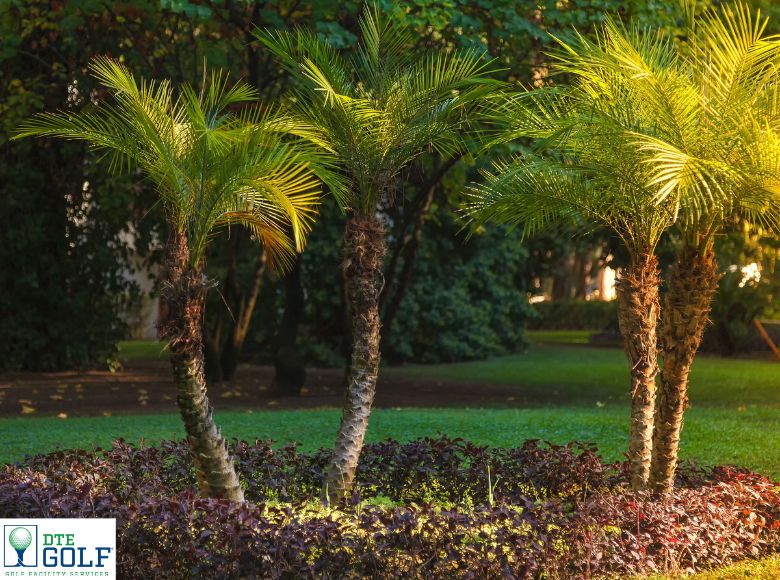
Why Neglecting Palm Tree Care Leads to Costly Golf Course Damage
Palms are often treated like a once-a-year chore. Crews come through, strip the canopy down to a tidy pom-pom shape, and move on. It looks clean for about a week. Then the yellowing starts. Then the fronds thin out. Then, during the next tropical storm, a palm that should have flexed and survived the wind instead snaps or drops a heavy frond onto a cart path, a green, or, worse, a golfer.
Overpruning is the single most common mistake on Florida courses, and it is almost always well-intentioned. Crews remove green, healthy fronds along with the dead ones to make the tree look neater. But green fronds are still doing important work. They are feeding the tree. Strip too many away, and the palm starts pulling nutrients from itself just to survive. That is exactly how you end up with a yellow-tipped, frizzled canopy that actually looks unhealthy.
Palm Tree Maintenance Best Practices for Healthy Golf Courses
Real palm care on a golf course comes down to a short list of practices executed consistently rather than dramatically. Prune only fronds that are fully brown or hanging loose. Fruit stalks and dead fronds can be removed, but living green fronds, even those that look slightly worn, generally should remain.
Feed palms on a schedule designed specifically for them, not with whatever fertilizer is already in the shed for the turf. Palms have different nutrient requirements, and potassium deficiency, in particular, appears quickly in Florida’s sandy soils. Inspect trees before storm season, not after, because a trained eye can spot a weak frond base or early signs of disease long before they become a safety issue during a summer squall. Consider tree placement relative to play as well.
A palm framing a tee box is serving a purpose, while a palm shading turf into a damp, disease-prone patch of rough is working against you.
This approach is supported by research. The University of Florida IFAS Extension describes a palm’s canopy as a clock face and recommends that pruning should never go past the 9 o’clock and 3 o’clock positions. This represents the absolute outer limit, not the recommended target. Following this single guideline consistently helps prevent most of the damage caused by overpruning.
How Palm Tree Maintenance Supports Better Golf Course Management
That last point is where palm tree maintenance stops being a landscaping task and becomes part of golf course management. Every palm on the property affects sightlines, shade patterns, nearby turf health, and risk exposure during weather events. Treating tree care as separate from turf strategy is how courses end up solving the same problem twice.
This is also where many clubs benefit from outside expertise. Golf course consulting is not just about green speed and bunker sand. An experienced team evaluating the entire property, palms included, can identify small issues before they become expensive problems. That may include a canopy blocking morning sunlight from the ninth green, a cluster of palms planted too closely for their mature spread, or a tree that should have been flagged for removal two seasons earlier.
Florida golf course maintenance operates on a different schedule than much of the rest of the country. Heat, humidity, hurricane season, and a nine- to ten-month playing calendar mean there is no true off-season to catch up on deferred palm care. What gets skipped in April often becomes a hazard in August.
Good golf course maintenance treats every tree on the property the same way it treats every green: on a schedule, with a plan, and with someone accountable for the outcome. Palms included.
Common Palm Tree Maintenance Mistakes and Best Practices
Maintenance Area | Common Mistake | Best Practice |
Frond pruning | Removing green, healthy fronds for a “cleaner” look | Remove only fully dead or hanging fronds. Leave living fronds intact. |
Fertilization | Using standard turf fertilizer on palms | Apply a palm-specific, slow-release fertilizer on a seasonal schedule. |
Storm preparation | Inspecting trees only after severe weather | Conduct inspections before hurricane season to identify weak points early. |
Placement strategy | Treating palms as decoration unrelated to turf | Factor shade, drainage, and sightlines into golf course management planning. |
Long-Term Oversight | One-time cleanup crews with no follow-up | Build ongoing care into a broader golf course consulting and maintenance plan. |
Final Thoughts
Effective palm tree maintenance is not about making a golf course look better today. It is about protecting the safety, playability, and long-term value of the entire property. Every healthy palm tree strengthens the course by reducing storm-related hazards, supporting turf health, enhancing the player experience, and preventing costly emergency repairs.
Golf courses that make palm tree maintenance a consistent part of their golf course management strategy are far better prepared for Florida’s demanding climate and are better positioned to deliver exceptional playing conditions year after year.
FAQs
Why is regular palm tree maintenance important for golf courses?
Regular palm tree maintenance helps prevent falling fronds, dead branches, and other hazards that can endanger golfers, staff, and property. It also supports healthy tree growth and keeps the course looking well maintained throughout the year.
How often should palm trees be trimmed on a golf course?
Most palm trees benefit from professional trimming once or twice a year, although the ideal schedule depends on the species, climate, and growth rate. Routine inspections help determine when additional maintenance is needed.
What are the signs that a palm tree needs professional maintenance?
Dead or hanging fronds, loose fruit stalks, pest activity, discoloration, and signs of disease indicate that a palm tree should be inspected by a professional. Addressing these issues early helps prevent larger problems and safety risks.
How does palm tree care improve golf course safety and appearance?
Regular care removes potential falling hazards and improves visibility around fairways, paths, and greens. Healthy, properly maintained palms also enhance the overall appearance and professional image of the golf course.
What are the benefits of proactive palm tree maintenance for golf course landscapes?
Proactive maintenance reduces emergency tree work, extends the life of palm trees, and lowers long-term maintenance costs. It also helps preserve a safe, attractive landscape that enhances the experience for golfers and visitors.
Protect Your Golf Course With DTE Golf®
Palms are one of the most visible features on a Florida golf course and one of the most overlooked when it comes to comprehensive maintenance planning. DTE Golf® builds palm and tree care directly into our broader golf course management and consulting services not as an afterthought, but as part of protecting the investment you’ve made in your course.
Learn how our tree care and landscaping services can support your golf course.