
A golf cart may seem like a simple piece of equipment, but every cart that leaves the staging area reflects the quality and professionalism of your course. Whether transporting golfers, staff, or equipment, each cart must operate safely and reliably throughout the day.
When brakes fail, steering becomes loose, tires wear unevenly, or electrical systems malfunction, the consequences can extend far beyond a delayed round. They can result in injuries, costly repairs, operational disruptions, dissatisfied golfers, and even legal liability. Regular golf cart repair and preventive maintenance are not just routine service tasks. They are essential for protecting golfers, extending fleet life, and safeguarding your golf course’s reputation.
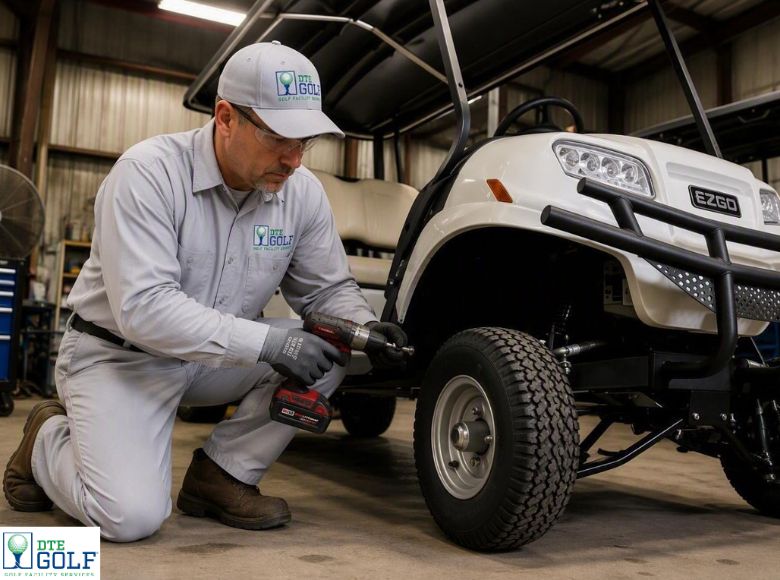
Key Takeaways
- Most golf cart failures stem from delayed maintenance rather than sudden mechanical defects.
- Emergency room visits resulting from golf cart accidents have risen sharply over the past decade.
- A documented inspection schedule helps reduce breakdowns and liability exposure.
- Preventive repair costs a fraction of accident-related downtime, emergency repairs, and insurance claims.
What Does Golf Cart Repair Actually Cover?
Golf cart repair involves much more than fixing broken parts. A comprehensive maintenance program includes brake inspections and adjustments, steering and suspension evaluations, tire inspections, electrical system diagnostics, battery maintenance, and body and frame integrity checks. Together, these services help ensure every golf cart operates safely and reliably across an 18-hole course despite Florida’s heat, humidity, and frequent rain.
Why Golf Cart Repair Matters More Than Operators Assume
Golf carts are often underestimated because of their size and relatively low speeds. In reality, they transport golfers, staff, and equipment across uneven terrain, cart paths, bridges, and private roadways, frequently without seat belts, doors, or reinforced safety features.
According to the U.S. Consumer Product Safety Commission, golf cart accidents resulted in 26,279 emergency room visits in 2023, representing a 73% increase since 2014. For golf facilities operating rental fleets, private clubs, or community cart programs, this growing trend highlights the importance of preventive maintenance and documented safety inspections.
Industry Insight From Golf Cart Repair Experts
Across the 800-plus holes DTE Golf® maintains, one pattern remains remarkably consistent. Golf carts that ultimately require major repairs almost always exhibit warning signs weeks in advance. Soft brake pedals, slight steering pull, uneven tire wear, or batteries that lose charge before completing a round rarely develop overnight.
Courses that perform documented weekly inspections typically identify these issues before they interrupt play or create safety concerns. Courses without a structured inspection program often discover problems the hard way, in the middle of a round with a golfer behind the wheel.
DIY Golf Cart Repair Checks Versus Professional Repairs
Task | DIY Appropriate | Needs a Technician |
Tire pressure and tread inspection | Yes | — |
Brake pad inspection | Visual inspection only | Adjustment or replacement |
Battery terminal cleaning | Yes | — |
Steering and tie-rod inspection | — | Yes |
Electrical and controller diagnostics | — | Yes |
Frame or suspension repairs | — | Yes |
Best Practices for Golf Cart Repair and Fleet Reliability
- Inspect brakes, tires, steering, and suspension every week rather than waiting for seasonal maintenance.
- Keep a written repair log for every cart because recurring patterns often reveal developing mechanical issues before they become costly repairs.
- Train staff to report unusual noises, steering issues, weak braking, or slow acceleration immediately.
- Remove any cart from service as soon as a safety concern is identified instead of allowing the problem to worsen.
- Schedule preventive maintenance throughout the year, even during slower seasons when carts are used less frequently.
Common Golf Cart Repair Mistakes That Lead to Costly Repairs
Many expensive repairs begin as minor maintenance issues that go unnoticed or are ignored.
Common mistakes include:
- Waiting until a complete breakdown occurs instead of addressing early warning signs.
- Allowing brake or steering issues to go unreported because the cart still appears to operate normally.
- Skipping inspections during slower seasons, allowing batteries, tires, brakes, and suspension components to deteriorate.
- Focusing only on battery maintenance while overlooking mechanical wear.
- Failing to document recurring repairs that may indicate larger mechanical problems.
Practical Golf Cart Repair Checklist
Use this checklist to help keep your golf cart fleet operating safely:
- Test braking performance on both flat and sloped surfaces every week.
- Check tire tread depth, inflation pressure, and overall condition before peak operating hours.
- Inspect steering for looseness, vibration, or delayed response.
- Listen for unusual noises during acceleration, braking, and turning.
- Inspect battery terminals, cables, and electrical connections for corrosion.
- Record every inspection and repair to identify recurring maintenance trends.
Final Thoughts
Golf cart repair is about far more than fixing equipment after it breaks. It is an essential part of protecting golfers, reducing liability, extending fleet life, and keeping daily operations running efficiently. Identifying small maintenance issues early helps prevent expensive repairs, unexpected downtime, operational disruptions, and accidents that can negatively affect both your reputation and your bottom line.
At DTE Golf®, we believe every golf cart should be as dependable as every green and fairway on your course. Our experienced technicians combine preventive maintenance, detailed inspections, and proactive repair programs to keep golf cart fleets operating safely and efficiently. As part of our comprehensive golf course maintenance services, we help facilities reduce breakdowns, improve fleet reliability, and deliver the exceptional experience golfers expect every round.
FAQs
How often should a golf cart be serviced?
Commercial golf carts should receive a basic safety inspection every week, with comprehensive preventive maintenance every three to six months, depending on usage. High-traffic golf courses may require more frequent servicing to maintain safe and reliable operation.
What are the most common golf cart repairs?
Common golf cart repairs include brake replacement, battery maintenance, tire replacement, steering and suspension repairs, electrical troubleshooting, controller repairs, and cable replacement. Addressing these issues early helps prevent more extensive and expensive repairs.
What are the warning signs that a golf cart needs repair?
Warning signs include reduced braking performance, unusual noises, steering that feels loose or pulls to one side, uneven tire wear, slower acceleration, battery performance issues, electrical problems, and dashboard warning lights. Any of these symptoms should be inspected before the cart returns to service.
Keep Your Fleet Course Ready Every Round
A well-maintained golf cart fleet protects golfers, staff, and your course’s reputation. DTE Golf® integrates fleet maintenance into the same disciplined, technician-led programs used across 800-plus holes of daily golf course maintenance nationwide.
Ready to keep every cart operating safely and reliably? Explore DTE Golf®’s Golf Course Maintenance services and let our team build a customized repair, inspection, and preventive maintenance program tailored to your course.