
Golf courses spend thousands each year repairing washed-out bunker faces, replacing contaminated sand, fixing drainage problems, and resolving playability issues. While routine maintenance offers only a temporary fix, professional bunker renovation services address the root causes by improving drainage, preserving sand quality, reducing erosion, and enhancing durability. This ultimately reduces long-term maintenance costs.
Key Takeaways
- Neglected golf course bunkers quietly drive up long-term maintenance spending.
- Professional bunker renovation addresses drainage, sand quality, and structural integrity together.
- Most bunkers need renovation every 10 to 15 years, sooner under heavy play or storm exposure.
- Better drainage after renovation means faster storm recovery and fewer labor hours.
- Reactive bunker repairs cost more over time than a planned renovation program.
Just because a bunker looks good does not mean it is not costing you more than it should. Contaminated sand, failing drainage, and washed-out edges do not always announce themselves. They show up as extra labor hours, repeated repairs, and golfer complaints that chip away at a course’s reputation. For any Florida golf course dealing with heavy rain and heavy play, bunker renovation is not a cosmetic upgrade. It is a cost-control decision.
Why Bunker Renovation Is Needed Sooner Than Most Golf Courses Expect
Bunker sand gradually loses quality as it mixes with soil, organic matter, and debris. Heavy rainfall, poor drainage, and repeated golfer traffic can cause the sand to compact, steadily reducing playability and consistency. This is especially true in Florida, where intense storm cycles and nearly year-round play accelerate the wear that lower-traffic courses might not experience for years.
What Professional Bunker Renovation Actually Fixes
Bunker renovation improves drainage by replacing outdated systems, repairing liners, and reshaping bunker floors, helping move water away more efficiently after heavy rainfall while minimizing washouts. That drainage improvement is the real cost driver behind renovation. A bunker that drains properly requires less emergency labor after every storm, fewer sand top-offs, and far less rework over its lifespan.
The Cost Benefits of Professional Bunker Renovation
Factor | Neglected Bunkers | Renovated Bunkers |
Post-storm recovery | Hours of manual pumping and raking per bunker | Faster natural drainage with minimal labor |
Sand replacement frequency | Frequent top-offs due to contamination | Extended intervals with a clean base |
Labor hours (seasonal) | High because of repeated washout repairs | Reduced because of a stable structure |
Golfer experience | Inconsistent lies and complaints | Predictable, USGA-aligned playability |
Renovation cycle | Reactive and unplanned | Every 10 to 15 years, depending on traffic and weather |
Bunker Renovation Warning Signs Golf Courses Should Never Ignore
Golf course bunkers may need renovation if they frequently develop standing water, contaminated or compacted sand, exposed liners, or repeated washouts. Inconsistent sand depth and poor playability are also common warning signs. Superintendents often treat these as isolated maintenance tasks. They patch a liner here and add sand there without recognizing that these are symptoms of a system nearing the end of its usable life. Skipping any one of these maintenance layers does not just reduce playability. It accelerates the need for costly bunker renovation down the line.
Case Study: A Golf Course That Ended the Repair Cycle With Bunker Renovation
A Central Florida course had been managing a familiar pattern for years: bunkers washing out after every significant rain event, crews spending hours reshaping faces and repairing sand, and golfers becoming increasingly vocal about inconsistent lies.
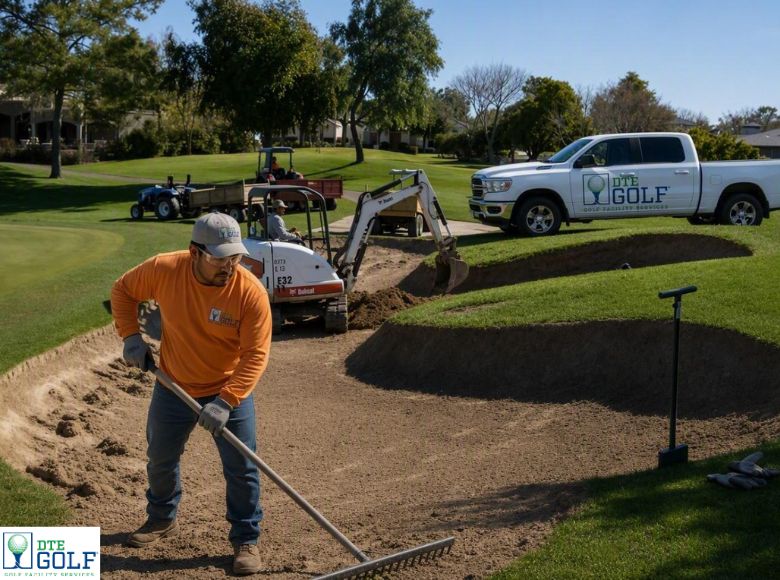
Rather than continuing the cycle of reactive patchwork, the course committed to a phased bunker renovation, rebuilding drainage systems, resetting sand depths, and redefining bunker edges hole by hole. The result was not just better-looking hazards. Post-storm recovery time dropped significantly, seasonal sand replacement needs declined, and crew hours that had been consumed by repeated bunker repairs were freed up for other golf course maintenance priorities. The renovation paid for itself in reduced labor alone, long before accounting for the improvement in player satisfaction.
Why Bunker Renovation Should Be Part of Your Golf Course Management Strategy
Bunker renovation does not happen in isolation. It works best as part of a broader golf course management strategy that pairs structural upgrades with consistent daily upkeep, including raking protocols, drainage inspections, and turf care around bunker edges. When sand quality, drainage systems, and maintenance practices are aligned, bunkers become a defining feature rather than a liability. Courses that treat renovation and ongoing maintenance as connected rather than separate achieve the greatest return on their investment.
Why Bunker Renovation Is a Long-Term Solution
The temptation to keep patching bunkers season after season is understandable. It feels less expensive at the moment. However, every patched liner and every emergency sand top-off becomes a compounding cost. Professional bunker renovation resets the entire system so a course stops paying repeatedly for the same underlying problem.
Final Thoughts
A strong golf course is built on long-term performance, not short-term repairs. Professional bunker renovation helps eliminate recurring maintenance problems at their source by reducing labor, preserving sand quality, and improving drainage for years to come. Instead of spending your budget on the same repairs season after season, investing in a properly renovated bunker system delivers more consistent playability, lower operating costs, and a better experience for golfers. In the long run, bunker renovation is not just a maintenance upgrade. It is one of the smartest investments a golf course can make.
FAQs
How does bunker renovation reduce golf course maintenance costs?
Bunker renovation improves drainage, reduces erosion, and keeps sand cleaner for longer. This lowers the need for frequent repairs and sand replacement. As a result, golf courses save on long-term maintenance costs.
How often should a golf course plan for bunker renovation?
Most golf courses should plan for bunker renovation every 10 to 15 years. Courses with heavy play or severe weather may need renovations sooner. Regular inspections help determine the right timing.
What role does proper drainage play in bunker renovation?
Proper drainage prevents standing water and minimizes washouts after rain. It helps maintain consistent sand conditions and improves playability. Good drainage also extends the life of the renovated bunker.
How do bunker liners improve long-term bunker performance?
Bunker liners prevent sand contamination and reduce erosion over time. They improve drainage and help keep sand in place during heavy rainfall. This results in lower maintenance and longer-lasting bunkers.
What common issues indicate a golf course needs bunker renovation?
Poor drainage, frequent washouts, contaminated sand, and exposed rocks are common warning signs. Inconsistent playing conditions and repeated repairs also indicate aging bunkers. Renovation restores performance, appearance, and durability.
Protect Your Course’s Playability and Your Budget
Bunkers should not be the reason your maintenance budget keeps climbing. DTE Golf® designs and renovates golf course bunkers to meet USGA standards for both playability and durability, backed by decades of hands-on golf course maintenance experience across Florida. Get in touch with us today.