
Top dressing is one of the few golf course maintenance practices that players rarely notice until it is neglected. Slow greens, bumpy putts, poor ball roll, and declining turf health often trace back to inconsistent or ineffective top dressing.
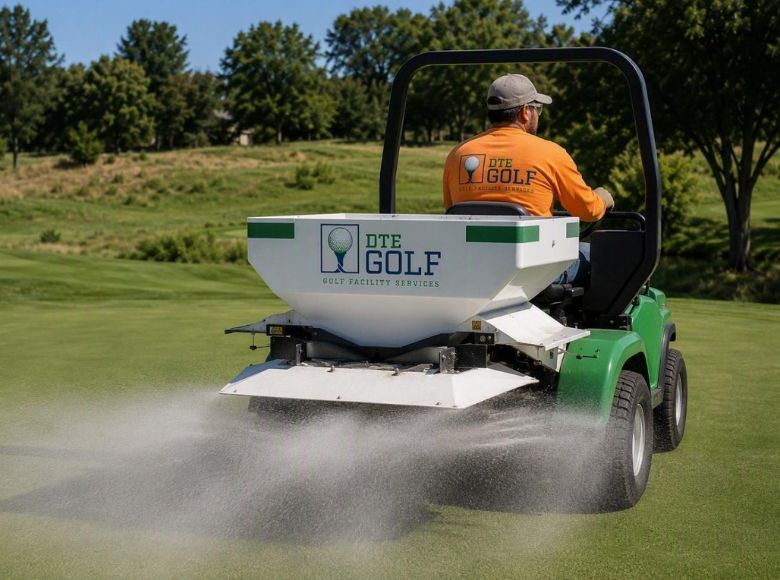
While many courses focus on mowing heights and irrigation to improve putting performance, the real difference between average greens and championship-quality surfaces often begins with a well-planned top dressing program. When done correctly, it creates smoother, firmer, faster greens while protecting turf health and reducing long-term maintenance costs.
Key Takeaways
- Top dressing fills surface voids that cause inconsistent ball roll, directly improving green speed.
- Regular sand application dilutes thatch, one of the biggest threats to golf course turf health.
- Timing and material selection matter as much as the practice itself.
- Florida’s warm-season Bermudagrass responds best to top dressing from late spring through early fall.
- A consistent program reduces disease pressure and long-term maintenance costs.
Golfers rarely think about top dressing. They notice the result: a green that rolls true, holds firm under a wedge, and looks flawless from tee to cup. Behind every smooth, fast putting surface is a quiet, unglamorous practice carried out on a consistent schedule. Top dressing does not make headlines. It makes great greens.
What Is Top Dressing and How Does It Improve Golf Greens?
Top dressing is the process of applying a thin, carefully measured layer of sand, soil, or a blended mix directly onto the turfgrass surface. On golf course greens, this layer is typically about ⅛ to ¼ inch thick, just enough to fill surface imperfections without smothering the grass. That thin layer does far more work than its size suggests. Voids exist within the turf canopy between turfgrass leaves and stems, causing inconsistent ball roll. Sand top dressing fills these voids to create a smoother, truer putting surface.
According to the USGA, regular sand top dressing helps maintain smooth, firm, and healthy putting greens.
Why Top Dressing Improves Green Speed and Playability
The ability of top dressing to produce a smooth, firm, and faster putting surface is its greatest benefit from a playability standpoint. That is why superintendents consider it a non-negotiable part of any serious maintenance program. As organic matter builds up in the soil, turf becomes spongy and slows the greens. Regular sand applications dilute that organic matter, creating a firmer surface that enhances green speed without compromising turf health.
Top Dressing Frequency and Best Practices
Research shows that frequent top dressing, at a rate of 2 to 3 cubic feet of sand per 1,000 square feet every 2 to 3 weeks, can significantly increase green speeds. To properly dilute thatch and support healthy turf, greens should generally be top-dressed every 7 to 14 days. In Florida, that schedule shifts with the seasons. More sand is applied during the summer when Bermudagrass putting greens are actively growing, while lighter “dusted” applications are used as soil temperatures cool and growth slows.
Top Dressing Schedule at a Glance
Course Area | Frequency | Purpose |
Greens | Weekly to every 2 to 3 weeks during peak season | Smoothness, firmness, and green speed |
Fairways | Monthly or seasonally | Drainage and surface leveling |
Tees | Seasonally | Faster divot recovery |
Thatch Layer | Ongoing with each application | Thatch dilution and disease prevention |
Why Superintendents Consider Top Dressing Essential
Top dressing is key to diluting thatch, increasing firmness, and improving surface smoothness. It is often described as the centerpiece of an effective greens management program because it complements every other cultural practice on the course. Skip it, and even a well-designed aeration or fertilization program will underperform. Pair it consistently with aeration, and the entire turf profile becomes stronger season after season.
Case Study: How Consistent Top Dressing Restored Green Performance
A Florida course had been managing greens that consistently played slower than course standards required, despite an otherwise solid maintenance routine. The root cause was not fertility or mowing height. It was an inconsistent top dressing schedule that had allowed thatch to accumulate unchecked.
Once a structured program was reintroduced, with light applications every one to two weeks paired with seasonal aeration, the greens firmed up within a single growing season. Ball roll became noticeably more consistent, golfer complaints about bumpy putts declined, and the course avoided a much more disruptive renovation that continued neglect would have eventually required.
Best Time for Top Dressing in Florida
Applying top dressing at the wrong time can reduce its effectiveness. In Florida, the ideal window runs from late spring through early fall, when warm-season golf course grasses such as Bermudagrass are actively growing and can recover quickly from surface work. Applications made outside that window recover more slowly, and greens can become patchy when consistency matters most.
Final Thoughts
Top dressing will never be the feature golfers rave about after a round, but it is the reason everything else they praise is possible. A green that rolls true, drains well, and resists disease is not an accident. It is the cumulative result of a disciplined, well-timed top dressing program carried out season after season. Courses that treat top dressing as optional often pay the price through slower greens, increased disease pressure, and higher maintenance costs over time.
FAQs
What is top dressing in golf course maintenance?
Top dressing is the process of applying a thin layer of sand or a sand-based material over golf greens. It helps create a smoother playing surface while supporting healthy turf growth. Regular top dressing also improves long-term green performance and consistency.
How does top dressing improve golf green speed and consistency?
Top dressing fills small surface imperfections and reduces thatch buildup across the greens. This creates a firmer, smoother surface that allows the ball to roll more consistently. As a result, golfers experience faster and more predictable putting conditions.
How often should golf greens receive top dressing applications?
Most golf courses apply top dressing every two to four weeks during the growing season. The frequency depends on turf type, climate, and the course’s maintenance program. Regular applications deliver the best long-term results.
Can top dressing help improve golf course turf health?
Yes. Top dressing improves soil structure, enhances drainage, and reduces excessive thatch buildup. It also encourages deeper root growth, helping turf remain healthier, stronger, and more resilient throughout the season.
What are the common mistakes to avoid when performing top dressing on golf greens?
Avoid applying excessive material, using the wrong sand, or spreading it unevenly across the surface. Top dressing should also not be performed during unsuitable weather conditions. Proper timing and application ensure the best turf health and playability.
Give Your Greens the Program They Deserve
DTE Golf® has spent more than three decades building precision golf turf management programs for Florida courses, and top dressing remains at the center of every successful program. If your greens are rolling more slowly than they should, it is time for a program tailored to your turf, your climate, and your course. Talk to our experts today.