
A great round of golf does not begin at the first tee. It starts long before sunrise, when players are still asleep and turf crews are already at work fine-tuning every inch of the course with precision. Every detail matters, from mowing and irrigation to aeration and turf health monitoring, because golf course lawn care is far more than routine maintenance. It is a year-round science that determines whether your course delivers a premium playing experience or quietly loses golfers to the competition.
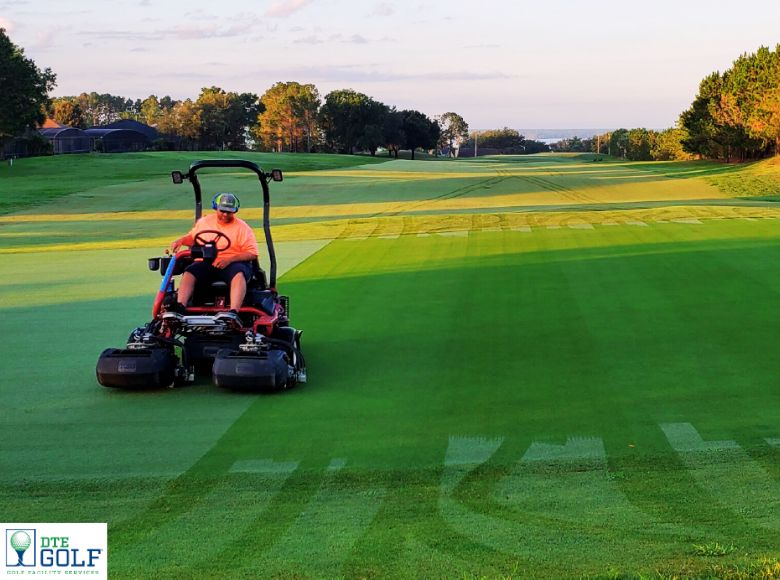
This guide covers the essential golf course turf management practices every superintendent, facility manager, and course owner should understand.
Why Golf Course Lawn Care Matters
Golf course turf is maintained for performance as much as appearance.
Greens must provide smooth, consistent ball roll. Fairways must offer reliable lies and quality shot conditions. Tees must withstand concentrated traffic. Roughs must create challenges without becoming unplayable.
Each area serves a unique purpose and requires a specialized maintenance strategy.
Poor golf course maintenance can create patchy fairways, slow greens, inconsistent lies, and uneven playing conditions. Over time, these issues frustrate golfers, harm reputation, and reduce repeat business.
The most successful golf courses understand their turf needs and deliver consistent results throughout the year.
Precision Mowing for Better Playing Conditions
Mowing is one of the most visible and important parts of golf course lawn care.
- Greens: Usually mowed daily for smooth speed and ball roll
- Tees: Typically mowed 2 to 3 times weekly
- Fairways: Usually mowed 2 to 3 times weekly
- Roughs: Often maintained weekly
Incorrect mowing height or poor timing can stress turf, weaken roots, and create scalping or thatch buildup.
Sharp mower blades are equally important. Clean cuts promote healthier turf and reduce disease risk.
Smart Irrigation for Healthy Turf
Water management has a direct effect on turf quality and playability.
Too little water can cause drought stress and thinning turf. Too much water can create disease pressure, shallow roots, and soft playing surfaces.
Best practices include:
- Deep, infrequent watering
- Early morning irrigation
- Moisture monitoring
- Seasonal schedule adjustments
- Smart irrigation technology
Courses that use efficient irrigation systems often improve consistency while lowering water waste.
Aeration, Topdressing, and Thatch Control
Traffic from golfers, carts, and maintenance equipment compacts soil over time. This limits oxygen flow, drainage, and root development.
Routine practices should include:
- Core aeration during active growth
- Topdressing for smoother surfaces
- Thatch management through verticutting
- Compaction relief programs
These services help maintain healthier turf and stronger root systems.
Fertilization and Pest Management
Strong turf depends on balanced nutrition and proactive protection.
Recommended strategies include:
- Soil testing throughout the year
- Nitrogen during active growth
- Potassium for stress tolerance
- Micronutrients as needed
- Integrated Pest Management (IPM)
Healthy turf naturally resists weeds, pests, and disease more effectively.
Seasonal Golf Course Lawn Care Calendar
Season | Key Focus | Goal |
Spring | Aeration, fertilization, growth recovery | Promote healthy growth |
Summer | Irrigation, mowing, stress management | Peak playability |
Fall | Recovery, overseeding, nutrient support | Strengthen turf |
Winter | Drainage, protection, planning | Preserve turf health |
Final Thoughts
Golf course lawn care is not just about keeping grass green. It is about creating a consistent, high-quality playing experience golfers trust every time they visit.
When mowing is precise, irrigation is efficient, and turf health is proactively managed, your course does more than look better. It performs better.
That is what keeps golfers returning season after season.
Frequently Asked Questions
How often should golf course greens be mowed?
Most greens are mowed daily during peak growing season to maintain speed and smoothness.
What is the best time to irrigate golf course turf?
Early morning is usually best because it reduces evaporation and disease risk.
Why is aeration important for golf courses?
Aeration relieves compaction, improves root growth, and helps water and nutrients move into the soil.
How can golf courses improve turf quality year-round?
Consistent mowing, irrigation, fertilization, aeration, and seasonal planning all improve long-term turf performance.
What causes patchy turf on golf courses?
Common causes include poor irrigation, compaction, disease pressure, nutrient deficiencies, and mowing stress.
Keep Your Course Healthy, Playable, and One Step Ahead. Act Today.
If your course is not consistently meeting player expectations, now is the time to improve your turf strategy. Better systems, smarter maintenance, and proactive planning create stronger turf and better golfer experiences.
At DTE Golf®, excellence is engineered into every detail. From advanced irrigation systems and soil-optimized fertilization to comprehensive golf course maintenance and landscaping, DTE Golf® delivers results-driven solutions that enhance playability, elevate aesthetics, and ensure long-term turf performance.