
A perfect golf shot lands softly on the fairway, rolls cleanly toward the pin, and settles exactly where players expect. Though these moments feel effortless, they are not. They are rarely accidental, and beneath every smooth and playable surface is a carefully engineered foundation. One of the most important elements shaping this foundation is golf course sand. It is a material that quietly determines how well a course drains, how consistently it plays, and how healthy the turf remains season after season.
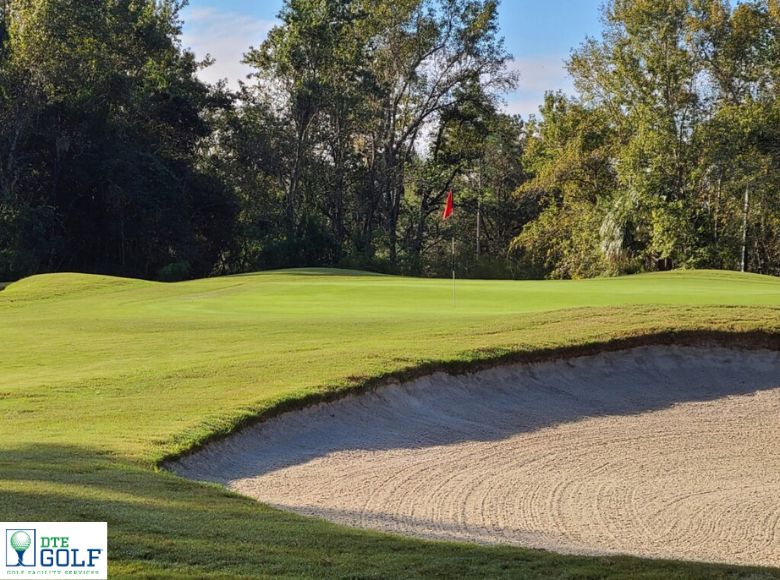
Every detail matters on a championship golf course, from turf density to bunker edges. Yet one of the most overlooked factors influencing course performance lies beneath the surface: golf course sand. For golfers, sand may appear to be nothing more than a bunker hazard or a thin layer brushed across greens. For superintendents and turf managers, however, sand is a structural component that directly affects turf health, drainage, surface firmness, and overall playability.
When the right sand is selected and managed correctly, it becomes the foundation of successful golf course maintenance. In climates like Florida, where sudden rainstorms, high humidity, and intense play can challenge turf conditions, choosing the right sand is not optional—it is essential.
Courses that focus on professional golf maintenance strategies often see measurable improvements in turf quality and playing conditions. Facilities that partner with experienced specialists, such as DTE Golf®’s daily golf course maintenance programs, can maintain consistent surfaces and healthier turf across greens, fairways, and bunkers.
Why Golf Course Sand Is Essential for Modern Golf Maintenance
There is a science behind golf course sand that goes far beyond aesthetics. Sand plays a structural role in the soil profile, especially in sand traps, fairways, and greens.
High-quality sand creates pore spaces within the soil, allowing oxygen and water to move freely. This is critical because turfgrass thrives in well-aerated environments where roots can breathe and excess water drains efficiently.
According to research published by the United States Golf Association, sand-based root zones significantly improve drainage and turf performance on golf greens.
Without proper sand composition, a course can quickly encounter problems such as:
- Standing water after rainfall
- Compacted turf roots
- Uneven putting surfaces
- Soft or inconsistent bunkers
This is why experienced golf management teams treat sand selection as a strategic decision rather than simply a supply choice.
Courses that combine proper sand selection with expert golf course management programs are able to maintain stronger turf systems and better playing conditions year-round.
The Relationship Between Golf Course Sand and Drainage Performance
Drainage is one of the most important reasons golf courses depend on sand. Florida courses regularly face heavy rainfall and high humidity. Without adequate drainage, fairways and greens can remain saturated for days, damaging the turf.
Properly selected golf course sand enables water to move efficiently through the soil profile. Coarser particles create channels that prevent water from pooling while maintaining the right level of moisture to support turf growth. This balance is critical. If the sand is too fine, it may compact and retain excess water. If it is too coarse, it may drain too quickly and reduce nutrient retention.
Experienced turf professionals carefully evaluate factors such as particle size, shape, and uniformity before integrating sand into a maintenance plan.
Research from Penn State Turfgrass Science programs also confirms that proper sand topdressing helps prevent compaction and improves soil aeration in high-traffic turf environments.
For many facilities, this level of evaluation is where specialized golf maintenance partners provide significant value. These professionals ensure that drainage systems, irrigation strategies, and sand profiles work together not against each other.
Improving Golf Course Playability Through Effective Sand Management
A great round of golf depends heavily on consistent playing surfaces. Sand directly affects how the ball behaves on greens, fairways, and bunkers.
Inconsistent sand quality can lead to:
- Ball plugging in bunkers
- Uneven lies in sand traps
- Soft greens that slow ball roll
Proper sand management ensures uniform bunker depth, balanced firmness, and predictable ball behavior.
For example:
- Angular sand particles help maintain stable bunker faces
- Uniform grains prevent compaction under foot traffic
- Balanced moisture retention keeps bunkers playable without becoming overly soft
Well-managed sand surfaces also reduce maintenance disruptions, allowing golf courses to remain playable even during peak seasons.
Golf courses that prioritize sand quality often see a subtle but powerful result: golfers experience more consistent rounds, which enhances the overall reputation of the course.
Many courses incorporate sand management into broader golf course renovation and construction planning, ensuring that drainage systems, bunker design, and turf structure work together effectively.
Golf Course Sand Types and Their Applications
Different areas of a course require different golf courses and types, each serving a unique function.
Silica Sand
Widely used for greens and bunkers due to its purity and resistance to compaction. It drains quickly while maintaining structural stability.
Mason Sand
A medium-grain sand often used in bunker faces and transition zones. It provides a balance between firmness and drainage.
Pit Sand
Typically used in subsurface layers to enhance deep drainage and reduce water accumulation beneath turf.
Manufactured Sand
Crushed stone sand designed for uniform particle size, helping create predictable playing conditions.
When these sand types are properly matched with soil conditions, irrigation systems, and turf varieties, the course becomes more resilient to weather, wear, and seasonal changes.
Why Turf Health Begins Below the Surface
Healthy turf does not grow from sunlight and fertilizer alone; it depends on a balanced soil profile. Sand contributes to this balance by improving oxygen movement around turf roots. This aeration helps roots grow deeper and stronger, creating more durable playing surfaces.
Regular sand topdressing also helps dilute organic matter that accumulates in turf over time, improving surface firmness and resilience.
The result is turf that:
- Recovers faster from play
- Maintains consistent color and density
- Resists disease and compaction
For courses focused on long-term maintenance, this underlying soil health is the difference between short-term fixes and sustainable performance.
Why Sand Management Is Critical for Florida Course Maintenance
Florida presents unique challenges for superintendents. High rainfall, sandy native soils, and year-round play create constant pressure on turf systems.
In this environment, effective course maintenance requires a carefully coordinated strategy that integrates irrigation management, drainage planning, and precise sand usage.
Courses that maintain a disciplined sand management approach often see benefits such as:
- Faster recovery after storms
- Reduced turf stress
- More consistent bunker play
- Lower long-term maintenance costs
This is why many facilities rely on experienced maintenance specialists who understand how sand profiles interact with local climate conditions and daily operations.
Final Thoughts
A great golf course is built from the ground up literally. While turf varieties, irrigation systems, and maintenance schedules all play their roles, the quality of golf courses quietly determines how well everything else performs. The right sand supports drainage, strengthens turf roots, stabilizes sand traps, and creates the consistent playing conditions golfers expect.
For long-term success, the goal is not simply to add sand, but to use the right type in the right place with the right strategy. When that balance is achieved, courses stay healthier, recover faster from weather, and deliver a better playing experience round after round.
Frequently Asked Questions About Golf Course Sand
- Why is choosing the right golf course sand important for drainage?
The right sand creates pore spaces in the soil that allow water to move through quickly. This prevents standing water, improves root oxygen levels, and helps the course recover faster after rain. - How does sand quality impact playability on golf courses?
High-quality sand ensures consistent bunker conditions, firm greens, and stable fairways. This improves ball roll, prevents plugging in bunkers, and creates more predictable playing surfaces. - What types of sand are best suited for golf course turf health?
Common types include silica sand, mason sand, pit sand, and manufactured sand. These are selected for their drainage ability, particle consistency, and resistance to compaction. - How does sand help prevent waterlogging and soil compaction?
Sand improves soil structure by increasing aeration and drainage. Its granular texture reduces soil density, allowing water to pass through while preventing compaction around turf roots. - What factors should golf course managers consider when selecting sand?
Key considerations include particle size, grain shape, drainage capacity, compatibility with existing soil, and performance under heavy play and local climate conditions.
Ready to Improve Drainage, Playability, and Turf Performance?
Discover how the experts at DTE Golf® help golf courses build stronger, healthier playing surfaces through smarter sand management and expert maintenance. Get in touch with the team today and take the first step toward better drainage, stronger turf, and more consistent play.