
Nothing frustrates golfers faster than a cart that slows down halfway through a round or dies before reaching the back nine. For golf course operators, these failures create far bigger problems than inconvenience. Delayed tee times, increased service calls, dissatisfied players, lost revenue, and unexpected replacement costs can quickly impact daily operations. In many cases, the root cause is not a major mechanical issue. It is poor golf cart battery maintenance.
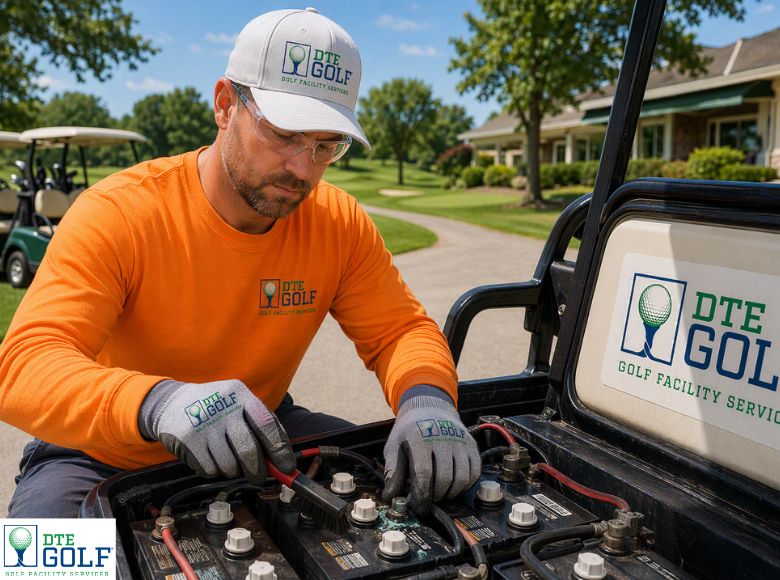
Effective golf cart battery maintenance is one of the simplest and most cost-effective ways to improve fleet reliability and extend battery life. It also reduces downtime and supports better golf management. Whether you operate a municipal facility, private club, resort course, or multi-course operation, battery maintenance should be a core part of your maintenance strategy.
Why Golf Cart Battery Maintenance Matters
During peak season, golf carts are in constant use. Every round places demands on the battery system. Neglecting routine golf cart battery maintenance accelerates wear and shortens the battery’s lifespan.
Industry maintenance experts consistently recommend charging batteries after use, monitoring water levels, cleaning terminals, and preventing deep discharges to maximize battery performance and longevity. For golf facilities, battery neglect creates more than mechanical problems. It creates operational problems.
A cart that loses power midway through a round disrupts the pace of play, frustrates golfers, and increases the likelihood of emergency golf cart repair. When multiple carts experience similar issues, fleet availability becomes a serious concern.
Proactive maintenance helps facilities reduce breakdowns, improve fleet availability, and create a more consistent player experience.
The Most Important Battery Maintenance Practices
1. Establish Consistent Charging Procedures
One of the most common causes of battery failure is inconsistent charging. Batteries should be charged after every use, even if the cart was used for only a short period. Allowing batteries to remain partially discharged encourages sulfation, which reduces battery capacity over time. Using automatic chargers also helps prevent overcharging and unnecessary battery stress.
A documented charging policy ensures every cart receives the same level of care.
2. Monitor Water Levels Regularly
For facilities operating flooded lead-acid batteries, water levels should be inspected frequently.
Experts recommend using only distilled water and checking levels after charging. Low water levels can expose battery plates and cause permanent damage, while overfilling can lead to acid overflow and corrosion. This small task can significantly extend battery life and reduce replacement costs.
3. Keep Battery Terminals Clean
Corrosion is one of the most overlooked causes of poor battery performance. Dirty terminals restrict electrical flow, increase resistance, and force batteries to work harder than necessary. Routine cleaning with a baking soda and water solution helps remove corrosion and maintain efficient connections.
Clean terminals also make it easier to identify loose cables and develop electrical issues before they require extensive golf cart repair.
4. Avoid Deep Battery Discharges
Repeatedly draining batteries to extremely low levels speeds up degradation. Most battery experts recommend avoiding discharges beyond approximately 80% whenever possible. Consistent deep discharges place additional strain on battery cells and shorten their overall lifespan.
Fleet managers should train staff to recharge carts promptly rather than waiting until batteries are nearly depleted.
Golf Cart Battery Maintenance Schedule
- Verify charge levels.
- Inspect for visible damage.
- Check water levels.
- Clean battery tops.
- Inspect cables and connections.
- Clean terminals and remove corrosion.
- Test battery performance.
- Review fleet maintenance records.
Common Warning Signs of Battery Problems
Battery issues rarely appear without warning.
Watch for these indicators:
- Reduced driving range
- Slow acceleration
- Longer charging times
- Corroded terminals
- Excessive battery heat
- Frequent service calls
- Inconsistent cart performance
Addressing these issues early can prevent larger failures and help avoid costly emergency golf cart repair work.
How Battery Maintenance Supports Better Golf Management
Reliable fleets contribute directly to efficient golf management. When batteries perform consistently, managers can schedule tee times confidently, reduce maintenance interruptions, and improve operational planning. Battery maintenance also supports budgeting by reducing unexpected replacement expenses and extending the useful life of fleet assets.
This is especially important for high-traffic facilities, where cart availability directly affects revenue and customer satisfaction. As DTE Golf notes, integrating fleet maintenance into daily operations helps managers identify issues sooner and maintain accurate fleet availability throughout the season.
For additional guidance on battery care and preventive maintenance practices, the U.S. Department of Energy provides useful information on battery performance and life cycle management through its energy efficiency resources.
Final Thoughts
Great golf course maintenance extends beyond greens, fairways, and bunkers. A dependable golf cart fleet is a critical part of the player experience, and battery health is the foundation of fleet reliability.
Facilities that prioritize proactive golf cart battery maintenance experience fewer breakdowns, lower repair costs, improved cart availability, and stronger operational performance. In a competitive golf environment, those advantages translate directly into greater golfer satisfaction and more efficient golf management. When battery maintenance becomes a routine part of daily operations rather than a response to problems, the entire golf course facility benefits.
FAQs
How often should golf cart batteries be inspected and maintained?
Golf cart batteries should be visually inspected daily, with water levels, connections, and overall battery condition checked weekly. A more thorough maintenance inspection should be performed monthly to ensure optimal performance and longevity.
What are the signs that a golf cart battery needs maintenance?
Common warning signs include reduced driving range, slow acceleration, longer charging times, corrosion on terminals, excessive battery heat, and inconsistent cart performance during operation.
How can proper charging practices extend golf cart battery life?
Charging batteries after every use, avoiding deep discharges, and using the correct charger help prevent battery damage, reduce wear, and maximize battery lifespan.
What maintenance tasks help improve golf cart fleet performance?
Regular battery inspections, terminal cleaning, water level checks, cable inspections, performance testing, and consistent charging practices all contribute to improved fleet reliability and efficiency.
How does regular battery maintenance help reduce fleet downtime?
Routine maintenance helps identify potential issues before they become failures, reducing unexpected breakdowns, minimizing repair needs, and keeping more carts available for daily operations.
Power Better Performance with DTE Golf®
A reliable fleet is essential to delivering the experience golfers expect. When battery issues lead to downtime, repair costs, and operational disruptions, both revenue and player satisfaction suffer.
DTE Golf® helps facilities implement smarter maintenance and golf management strategies that improve fleet reliability, reduce costs, and keep operations running at peak performance. From golf cart maintenance to comprehensive operational support, DTE Golf® provides the expertise needed to maximize efficiency and long-term success.
Ready to reduce downtime and get more from your fleet? Contact DTE Golf® today and discover how proactive management can drive better results across your entire operation.