
Walk a fairway an hour after a busy tee sheet clears, and you will see the damage left behind. Torn turf and loose soil are easy to spot. The fairway is marked by a trail of scars from every iron shot that struck the ball first and the ground second. None of it looks urgent. That is exactly the problem. Divot repair is one of the smallest tasks in golf course maintenance and one of the most consequential.
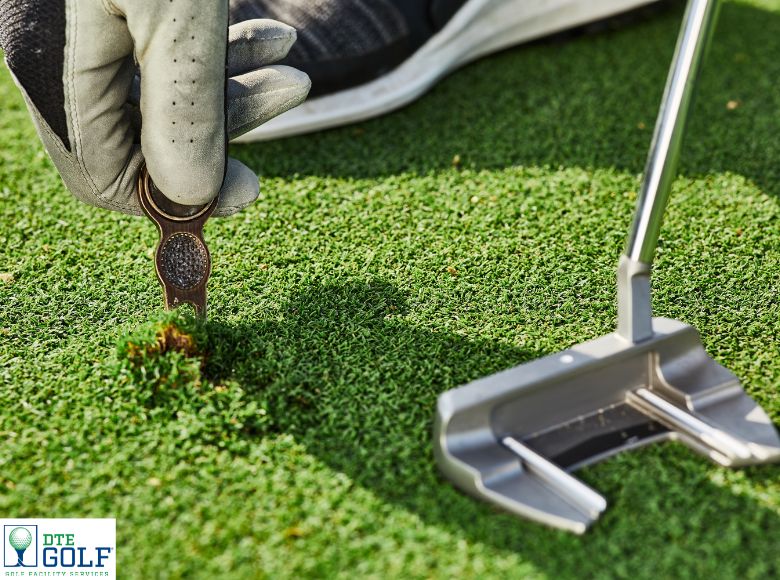
A divot is not just cosmetic damage. When a clubhead strikes the turf, it rips through the leaf, the crown, and often the root zone beneath it. The exposed soil is now vulnerable to sun, heat, and foot traffic, with nothing to protect it. Left alone, the cavity dries out, compacts, and hardens into a surface where new growth struggles to take hold. What started as a single swing becomes a bare patch that outlasts the round, the week, and sometimes the entire season.
When hundreds of rounds are played across the golf course, maintaining healthy turf becomes difficult.
Unrepaired divots create openings for weeds to establish before grass can recover. They hold water unevenly, which invites fungal disease in Florida’s heat and humidity. They disrupt ball roll and footing on fairways, and on tee boxes, they shrink the usable hitting area golfers rely on for a clean strike. A course that lets divots accumulate is quietly losing turf density and playability at the same time.
Choosing the Right Golf Divot Repair Tool
Proper divot repair starts with the right technique and the right golf divot repair tool for the job. When a divot holds together with soil still attached, replacing it and pressing it firmly back into place restores root-to-soil contact and gives the turf its best chance to heal. When the divot has shattered or lost its soil, filling the cavity with a sand or sand-seed mix is the better option. The mix should sit level with the surrounding turf, neither mounded above it nor sunk below it. Either extreme creates a new playability problem instead of solving the old one. A dedicated divot repair tool, whether a simple tamper, a sand-and-seed bottle, or course-issued divot mix boxes, keeps the process consistent from one crew member or one golfer to the next.
Golf Turf Management Through Effective Divot Repair
This is where individual repairs and course-wide golf turf management come together. A single filled divot helps one square foot of turf. A structured program, backed by trained crews checking fairways, tees, and rough on a set rotation, protects the entire playing surface. That is the difference between reactive patchwork and disciplined golf course management: knowing where divot damage concentrates, restocking mix stations before they run empty, and incorporating divot repair into the same daily routine as mowing and bunker raking instead of treating it as an afterthought.
Grass type shapes how quickly turf recovers. Warm-season grasses are common on Florida courses, including bermudagrass and zoysiagrass, which spread through underground stems and typically fill in divots faster than many cool-season varieties that often depend more heavily on seed germination.
According to the United States Golf Association, matching the right sand-and-seed composition to a course’s turf and properly repairing divots gives grass the best chance to recover quickly and helps restore a smooth playing surface. Even fast-healing turf still needs the cavity filled correctly and promptly. Recovery speed is a turf advantage, not a substitute for maintenance discipline.
Repair Method | Best Used For | Tool Required | Typical Recovery Time |
Replace intact divot | Divots with soil and roots still attached | Hand or tamper | 1 to 2 weeks |
Sand-only fill | Warm-season grasses (bermudagrass, zoysiagrass) | Sand bottle or divot box | 2 to 4 weeks |
Sand-and-seed mix fill | Cool-season grasses or bare, shattered divots | Sand-and-seed divot repair tool | 3 to 6 weeks |
Course-wide rotation program | Fairways and tees under heavy daily traffic | Crew-issued mix stations | Ongoing, continuous |
Final Thoughts
Divot repair is one of the simplest yet most impactful practices in golf course maintenance. Each repaired divot helps protect healthy turf, preserve smooth and consistent playing surfaces, and extend the long-term quality of your golf course.
When integrated into a disciplined golf turf management program, routine divot repair reduces costly turf restoration, enhances golfer satisfaction, and safeguards the appearance and playability of every fairway and tee. Investing in consistent divot repair today helps ensure your course continues to deliver exceptional playing conditions for years to come.
FAQs
Why is divot repair important for golf course turf?
Unrepaired divots expose soil and roots to heat, sun, and traffic, slowing recovery and inviting weeds and disease. Prompt repair protects turf density and keeps playing surfaces smooth.
What is the best golf divot repair tool for fairways?
It depends on the divot. Intact divots can be replaced by hand and tamped down. Shattered or soil-free divots recover best with a sand or sand-seed mix applied through a divot bottle or course-issued repair station.
How often should golf course turf be checked for divot damage?
High-traffic fairways and tees should be checked daily as part of routine golf course maintenance, with mix stations restocked regularly to maintain consistent repairs.
Does grass type affect divot recovery time?
Yes. Warm-season grasses like bermudagrass and zoysiagrass generally recover faster than many cool-season grasses, which often rely more on seed germination to fill divots.
Protect Your Golf Course With DTE Golf®
A golf course is only as good as the condition of its playing surfaces. Consistent divot repair is not something that happens by chance. It requires a structured maintenance program, experienced technicians, and daily attention to detail. Even small areas of unrepaired turf can quickly add up, affecting course appearance, turf health, and the quality of play.
DTE Golf® integrates divot repair into everyday course maintenance. Our trained technicians systematically repair divots, replenish sand-and-seed mixtures, monitor turf recovery, and address damaged areas before they become larger maintenance issues. This proactive approach helps promote faster turf regeneration, maintain smooth and consistent playing surfaces, and reduce long-term repair costs.
By restoring damaged turf every day, DTE Golf® helps preserve the visual appeal of your course while delivering the consistent fairway conditions golfers expect. From the opening tee shot to the final putt, every hole benefits from healthier turf, improved playability, and a maintenance program designed to protect your investment season after season.