
The difference between a championship-quality golf course and one that struggles after every rainstorm is often invisible, but it lies underground. Every firm fairway, consistent green, and playable hole depends on two systems working in perfect balance: drainage and irrigation. When either system fails, golfers notice it immediately through muddy lies, soft turf, standing water, and course closures. When both systems are designed to work together, they create the firm, fast-playing conditions golfers expect while protecting the long-term health of the turf.
Key Takeaways
- Drainage and irrigation work as one integrated system, not two separate concerns.
- Poor drainage undermines even the best irrigation programs.
- Firm, well-drained turf provides better playing conditions and recovers faster from stress.
- Renovation is often the only long-term solution once drainage infrastructure reaches the end of its service life.
Understanding Drainage and Irrigation Systems for Golf Courses
Irrigation delivers water precisely where turf needs it, while drainage removes excess water that turf cannot absorb. Surface drainage quickly removes heavy rainfall, while subsurface drainage manages water beneath the soil profile that grading alone cannot address. Together, these systems regulate soil moisture, one of the most important factors affecting turf firmness, root development, disease resistance, and overall playing conditions.
Why Drainage and Irrigation Matter for Golf Course Playability
Golf courses have installed extensive drainage pipe networks over the years to improve playability in areas prone to wet conditions. Saturated soil does not simply create soft playing surfaces. It weakens turf from the roots upward, limits oxygen availability, encourages disease, and delays recovery from stress.
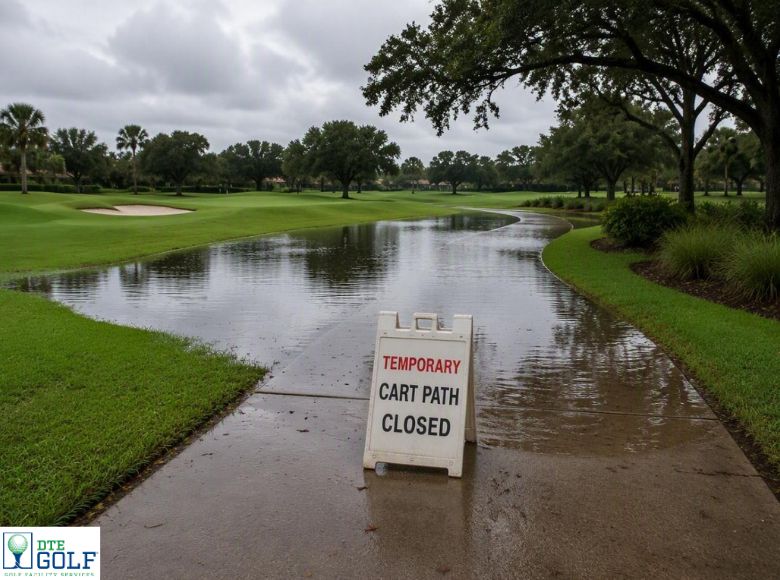
A properly designed drainage system allows superintendents to maintain firm fairways with better bounce and roll, keep the course open after heavy rainfall, reduce cart restrictions, and support healthier, more resilient turf. Irrigation without effective drainage simply relocates the problem because excess water must go somewhere.
The Investment Value of Drainage and Irrigation Systems
Modern golf course irrigation systems represent significant capital investments that can exceed $5 million, while also requiring ongoing maintenance, periodic upgrades, and eventual replacement as infrastructure ages. That investment delivers the greatest return only when drainage is designed alongside irrigation. Without proper drainage, golf courses often end up watering turf that cannot efficiently absorb or release moisture, resulting in wasted water, declining turf quality, and increased maintenance costs.Golfdom
Industry Insight on Golf Course Drainage Challenges
On older golf courses, the same pattern appears repeatedly. An aging irrigation system is often blamed for declining turf quality when the real issue is outdated drainage infrastructure that has never been upgraded. A fairway with slow-draining soil and limited internal slope will remain soft regardless of how precisely the irrigation system is calibrated.
The solution is not greater irrigation control alone. It begins with improving drainage infrastructure and then optimizing irrigation coverage to support healthy turf and consistent playing conditions.
Common Golf Course Drainage and Irrigation Challenges
Issue on the Course | Root Cause | Recommended Solution |
Standing water after rainfall | Poor surface or subsurface drainage | Install drainage or regrade affected areas |
Soft, spongy fairways | Excess soil moisture retention | Conduct a combined drainage and irrigation assessment |
Uneven turf color and health | Inconsistent irrigation coverage | Perform a comprehensive irrigation system audit |
Frequent cart path closures | Inadequate subsurface drainage | Upgrade the subsurface drainage system |
Rising water costs with no improvement in conditions | Outdated or mismatched infrastructure | Complete a Renovation and Construction assessment |
Best Practices for Golf Course Drainage and Irrigation
- Design drainage and irrigation systems together during every renovation rather than treating them as separate projects.
- Prioritize subsurface drainage in low-lying, high-traffic areas, including fairway landing zones and approaches.
- Schedule irrigation for deep, infrequent watering cycles to encourage stronger, deeper root systems.
- Evaluate both systems whenever turf disease, compaction, or recurring wet areas become seasonal problems.
- Inspect drainage outlets and irrigation components regularly to maintain peak system performance.
Common Golf Course Drainage and Irrigation Mistakes
Many drainage and irrigation problems develop gradually because underlying infrastructure is overlooked.
Common mistakes include:
- Upgrading irrigation while leaving decades-old drainage infrastructure untouched.
- Treating wet turf as an irrigation scheduling problem instead of identifying the underlying drainage issue.
- Ignoring soil type, slope, and water movement when designing new irrigation zones.
- Delaying renovations until drainage failures result in course closures during peak playing seasons.
- Failing to inspect drainage systems after major storms or prolonged periods of heavy rainfall.
Golf Course Drainage Inspection Checklist
Use this checklist to identify potential drainage and irrigation issues before they affect playability:
- Map problem areas after the next heavy rainfall to identify natural drainage patterns.
- Test soil compaction and slope in chronically wet areas.
- Compare irrigation coverage with actual turf performance rather than relying solely on sprinkler output.
- Inspect drainage outlets for blockages or damage.
- Consult a golf course renovation specialist before minor drainage issues become major infrastructure problems.
FAQs
Can irrigation fix a drainage problem?
No. Irrigation controls how much water is applied, while drainage removes excess water from the soil. Adjusting irrigation cannot solve poor drainage, and without effective drainage, even the most advanced irrigation system will struggle to maintain firm, healthy playing conditions.
How do I know if my course needs a drainage upgrade?
Recurring standing water after rainfall, soft or spongy fairways, persistent wet spots, and frequent cart restrictions are among the clearest signs. If these issues continue despite irrigation adjustments or routine maintenance, the underlying drainage infrastructure should be professionally evaluated.
Does better golf irrigation reduce long-term maintenance costs?
Yes, but only when it is supported by an effective drainage system. Together, these systems improve water efficiency, reduce turf stress and disease pressure, minimize costly repairs, and help maintain consistent playing conditions, ultimately lowering long-term operating and maintenance costs.
Final Thoughts
The best golf courses do not simply add or remove water. They manage it with precision. Drainage and irrigation must function as one integrated system to create firm playing surfaces, healthier turf, and consistent conditions throughout the season. Investing in one while neglecting the other addresses only the symptoms rather than the underlying cause.
Whether you are renovating an aging golf course or planning a new construction project, a well-designed drainage and irrigation strategy is one of the smartest long-term investments you can make. The result is improved playability, healthier turf, reduced maintenance costs, and a golf course that performs consistently in every weather condition.
Build Better Golf Courses With Expert Drainage and Irrigation Solutions
Drainage and irrigation are not separate line items. They are two parts of one integrated system, and designing them together is what separates a golf course that remains playable after heavy rainfall from one that experiences frequent closures.
DTE Golf®’s Renovation and Construction team designs drainage and irrigation systems as a unified solution, supported by decades of hands-on golf course management and maintenance experience across more than 800 holes.
Ready to solve drainage and irrigation challenges at the source? Explore DTE Golf®’s Renovation and Construction services and let our team develop a customized solution engineered for your course’s soil conditions, topography, and long-term playability goals.