
A greens mower does far more than just cut grass. It defines how a putting green feels, how a golf ball rolls, and how players remember their round. Smooth, fast, and consistent greens are not created by chance, they are the result of a properly set greens mower, precise cutting practices, and disciplined maintenance routines.
When the greens mowing program is followed correctly and consistently, it can transform ordinary greens into surfaces golfers can trust and enjoy. The putting surface is where rounds are ultimately decided and remembered. At the center of every great putting surface is the decision-making behind how, when, and with what equipment those greens are cut.
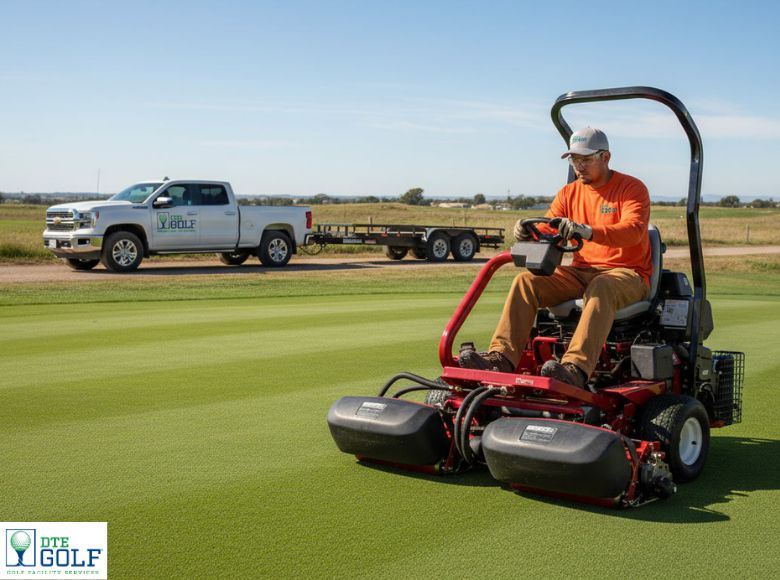
Getting your greens mower program right is not just a maintenance task, it is a competitive advantage.
Why the Greens Mower Is the Most Important Equipment for Golf Course Greens
Every piece of equipment on a golf course has its role. Rough mowers handle volume. Fairway mowers cover ground. But the greens mower operates in the most unforgiving environment on the property, a surface that golfers read, judge, and make decisions on, even from 10 feet away.
The physics are demanding. Cutting heights on modern greens typically range from 0.100 to 0.125 inches. At that height, the difference between a blade set slightly off and one dialed in perfectly is the difference between a true roll and one that flares wide.
This is why experienced golf course superintendents treat their greens mowing program with the same precision a club fitter applies to equipment. It is not about having the most expensive machine, it is about understanding what it does to your turf every single morning.
Ideal Greens Mower Height of Cut for Faster Putting Greens
When golfers ask for faster greens, the first reaction is often to lower the cutting height. Lower cuts can increase speed, but doing so too aggressively can damage the turf.
Cutting too low without proper turf care can stress the grass, making the green worse not better. Most successful golf course maintenance programs follow a careful approach:
- Set the starting height based on the type of grass. Bermudagrass usually handles lower cuts better than bentgrass, while paspalum requires its own approach.
- Make very small adjustments usually no more than 1/64 inch at a time to avoid shocking the turf.
- Allow the grass time to recover between lower cuts.
- Adjust mowing heights based on seasonal and weather conditions.
Green speed does not come from lowering the blades alone. It also depends on surface firmness, grass growth patterns, and consistent maintenance.
Greens Mower Reel Maintenance for Clean and Healthy Turf Cutting
The performance of a greens mower depends heavily on the condition of its reel. If the blades are dull or poorly adjusted, they will not cut the grass cleanly; they will tear it. Torn grass surfaces are undesirable because they create rougher conditions that affect ball roll.
High-quality maintenance programs typically follow these practices:
- Check and adjust the reel-to-bedknife clearance daily during the busy season.
- Schedule full reel grinding based on hours of use, not just calendar dates.
- Perform regular backlapping to keep blades sharp between major services.
- Use the paper test: if the reel cannot cut cleanly through a sheet of paper, it will not cut grass properly.
The best putting surfaces are usually found on courses where equipment maintenance is fully integrated into the turf management program.
Best Greens Mowing Patterns to Control Grass Grain and Improve Ball Roll
The direction in which greens are mowed also matters. Changing mowing patterns regularly prevents the grass from leaning in one direction, a condition known as grain. It also reduces wear from repeated mower tracks.
Tournament-quality greens are often mowed in different directions daily. On Bermudagrass greens, grain can strongly affect ball roll. To manage this, many courses combine directional mowing with practices such as light topdressing and brushing before mowing.
If grain is ignored, simply lowering the cutting height will not fix inconsistent ball roll. Mowing patterns on nearby fairways can also influence how players approach the green, affecting overall playability.
For deeper turfgrass research and best practices, many professionals rely on programs that provide valuable guidance for superintendents and turf managers.
Rolling Golf Greens to Increase Speed and Surface Smoothness
Rolling greens has become an important part of modern golf course maintenance. When used correctly, rolling firms the surface, smooths minor imperfections, and increases green speed without additional mowing. Many courses roll their greens two to four times per week, depending on conditions.
However, rolling should support mowing, not replace it. If a course relies too heavily on rolling and reduces mowing too much, grass clippings can build up, leading to a decline in surface quality. The best results come from a balanced program that combines both mowing and rolling.
Seasonal Greens Mowing and Maintenance Strategies for Golf Courses
Green maintenance must change with the seasons. Spring preparation, summer stress management, fall recovery, and winter care all require different mowing schedules and turf practices.
Cutting frequency, mowing height, rolling schedules, and topdressing routines should all be adjusted throughout the year.
Golf courses that use the same mowing program year-round often experience turf health and surface quality issues. Courses that adapt their programs seasonally typically achieve better results.
How DTE Golf Helps Improve Golf Course Greens
High-quality putting surfaces do not happen by chance. They result from careful planning, well-maintained equipment, and smart turf management decisions.
DTEGolf has spent more than 30 years developing and refining these programs across more than 800 golf holes in Florida and other regions.
Their teams combine the expertise of experienced golf course superintendents with customized maintenance strategies designed for each course’s grass type, climate, and player expectations.
If your greens are not performing as they should, the solution often lies in the details of your mowing and maintenance program.
Final Thoughts on Greens Mower Maintenance and Putting Surface Quality
A great putting surface is never accidental. It comes from careful attention to the small details that shape how the green performs every day.
The way a greens mower is set, maintained, and used has a direct impact on turf health, green speed, and the consistency of every putt.
By focusing on proper cutting heights, sharp reels, varied mowing patterns, and a balanced rolling schedule, golf course teams can create greens that roll true and stay healthy throughout the season.
When these practices are followed consistently, the result is that every golfer expects a smooth, reliable surface where skill, not turf conditions, determines the outcome of the putt.
Greens Mower FAQs for Golf Course Maintenance
- How often should greens be mowed for optimal speed?
Most golf courses mow greens daily during the growing season to maintain consistent speed and smooth ball roll. Some courses alternate mowing with rolling depending on turf health and weather conditions. Consistency is key. - What height should a greens mower be set at?
Greens are typically cut between 0.100 and 0.125 inches, depending on grass type and course conditions. Bermudagrass can usually tolerate slightly lower heights than bentgrass. Adjustments should be made gradually to avoid stressing the turf. - How do you maintain consistent surface quality?
Consistency comes from proper mower setup, sharp reels, varied mowing patterns, and balanced rolling schedules. Additional practices like topdressing, brushing, and seasonal adjustments also help. - What are common mistakes when using a greens mower?
Common mistakes include cutting too low, using dull or poorly adjusted reels, and mowing in the same direction every day. Ignoring turf recovery time can also damage grass health. - How does mowing frequency affect green speed?
Frequent mowing generally increases green speed by reducing grass height and controlling growth. However, excessive mowing without proper care can stress the turf. A balanced approach delivers the best results.
Ready to Improve Your Greens with DTE Golf®?
Better greens start with the right expertise and maintenance strategy. DTE Golf® helps golf facilities create smoother, faster, and more consistent playing surfaces through professional turf management and customized course programs.