
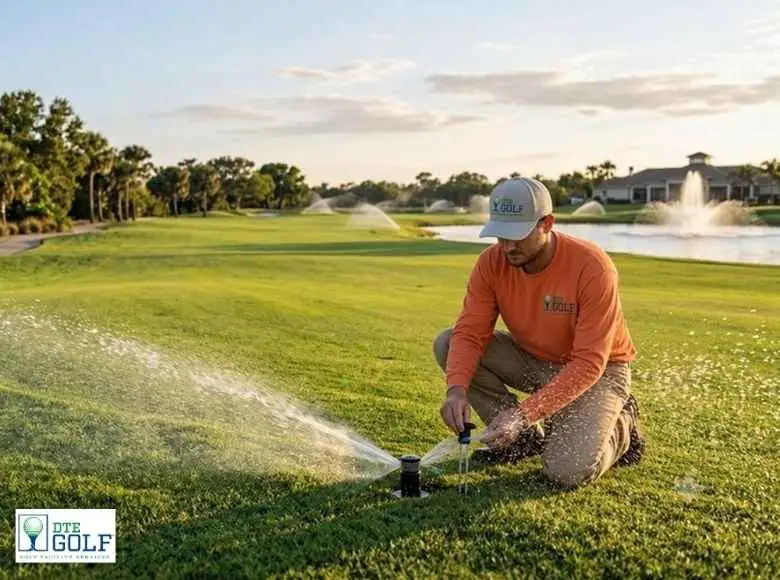
Florida can drown a fairway on Tuesday and bake it by Friday. One afternoon storm floods the low spot on the seventh, while the raised tee beside it crisps in the sun. Golfers never see the weather report. They see patchy, ragged turf. On Florida golf courses, the gap between a tournament-ready course and a tired one is rarely luck. It is irrigation.
Key Takeaways
- Irrigation is the strongest lever for turf health in Florida.
- Water by turf demand, not by the calendar.
- Overwatering damages turf as much as drought does.
- Design, data, and upkeep must work together.
Proper Irrigation Practices for Florida Golf Courses
Proper golf course irrigation is not about how much water a system can move. It is about applying the right amount, in the right zone, at the right time. When it is done well, it builds deep roots and firm, even surfaces. When it is done poorly, it creates shallow roots, thatch, fungal disease, and a bigger water bill.
Why Florida Golf Courses Need Climate-Responsive Irrigation
Florida pairs intense heat with sandy soils that drain fast and rain that arrives in bursts. Sand holds little water, so turf can become stressed within days of a dry spell. Yet a summer storm can saturate the same ground in an hour. UF/IFAS estimates turfgrass irrigation needs at about 20 to 25 inches a year in north Florida and 30 to 35 inches in south Florida. The good news is that efficiency is achievable.
UF/IFAS reports that projected water use on golf courses has dropped 29% since 2005, largely thanks to best management practices. Healthy turf and responsible water use are partners, not rivals. For deeper guidance, see this UF/IFAS turfgrass irrigation FAQ.
Factor | Timer-Based Schedule | Data-Driven Irrigation |
Scheduling Basis | Fixed calendar dates and preset run times | Soil moisture, weather conditions, and actual turf demand |
Water Use | Higher because it waters whether the turf needs it or not | Lower because it replaces only the water the turf has used |
Turf Health | Can create overwatered zones, dry patches, and more disease pressure | Encourages deeper roots, firmer surfaces, and fewer disease problems |
Rain Response | Slow; often depends on manual shutoff | Automatic pause through rain sensors |
Staff Effort | Requires frequent manual adjustments and overrides | Less guesswork and more time for agronomy |
Best For | Basic, low-maintenance areas | Greens, tees, fairways, and high-use turf |
Five Irrigation Practices That Protect Florida Golf Course Turf
Deeper Roots
UF/IFAS turfgrass guidance favors applying about half to three-quarters of an inch once 30% to 50% of the turf shows wilt, instead of using light daily sprinkles. Deep, infrequent watering sends roots down, where they can ride out the heat.
Less Disease
Wet, humid canopies invite fungus. Early morning cycles let blades dry as the sun climbs, and rain sensors stop irrigation after a storm.
Uniform Conditions
Matched heads, correct spacing, and steady pressure prevent dry patches and soggy low spots, so ball roll stays consistent.
Faster Recovery
Hydrated roots help turf recover from cart traffic, divots, and heat.
Real Savings
A study cited by UF/IFAS found that tensiometer-controlled irrigation cut water applied by 42% to 95% compared with daily scheduling. Less water means less pumping and fewer fungicide passes.
Smart Irrigation Practices for Florida Golf Course Maintenance
Great Florida golf course maintenance treats irrigation as a daily agronomic decision, not an automated routine.
- Audit the system: Catch-can tests and head inspections expose broken or mismatched heads before the turf does.
- Irrigate by zone: Greens, fairways, tees, and roughs need different amounts.
- Follow the data: Soil moisture probes and on-site weather stations show what turf actually used.
- Manage the soil: Aeration and wetting agents help sandy soils hold moisture longer.
- Plan smarter landscaping: Thoughtful golf course landscaping, such as native plantings and low-water zones around non-play areas, trims demand.
- Bring in outside eyes: Golf course consulting can reveal coverage gaps and scheduling habits that staff are too close to see.
How DTE Golf® Helps Florida Golf Courses Irrigate Smarter
DTE Golf®, a division of Down To Earth Landscape & Irrigation, has spent more than 30 years serving golf facilities across Florida and the Southeast.
We maintain more than 800 holes, so we know how irrigation performs in real conditions. We combine irrigation management, agronomic support, and landscape services to keep turf healthy, playable, and efficient year-round. We assess your system, tune your schedules, and build a plan around your turf, budget, and water goals.
Final Thoughts
Water is the most powerful tool a superintendent controls, and the easiest to misuse. Florida golf courses that irrigate by need, maintain their systems, and trust their data earn healthier turf, lower costs, and happier golfers. Start with an audit. Everything else follows.
FAQs
How Should Irrigation Schedules Be Adjusted for Florida’s Heat, Rainfall Patterns, and Seasonal Turf Requirements?
Review schedules monthly, or more often, using evapotranspiration and rainfall data. Increase run times during hot, dry spring weeks, pause during summer rains, and cut back in cooler months when growth slows.
What Irrigation Practices Help Florida Golf Courses Prevent Both Overwatering and Drought Stress in Fairway Turf?
Water deeply and less often, guided by soil moisture and visible stress rather than the calendar. Run cycles before dawn, hand-water hot spots, and audit coverage regularly so no area is over- or under-watered.
How Can Golf Course Superintendents Use Soil Moisture Data and Weather Conditions to Improve Irrigation Efficiency?
Moisture probes show what is in the root zone, while weather stations estimate how much water the turf uses. Pair the two to replace only what was lost, zone by zone, and log results to sharpen each season’s schedule.
What Role Do Irrigation System Design, Sprinkler Coverage, and Water Distribution Play in Maintaining Consistent Turf Conditions?
Even coverage is everything. Proper head spacing, matched nozzles, and steady pressure deliver the same precipitation rate across a zone. Poor design forces staff to overwater some areas to save others.
How Can Florida Golf Courses Reduce Water Waste While Maintaining Healthy, Playable Turf Year-Round?
Fix leaks and misaligned heads, use zone control and rain shutoffs, and schedule by turf demand. Aeration, wetting agents, and low-water landscaping in non-play areas further cut demand.
Ready to Improve Irrigation on Your Golf Course?
Talk to DTE Golf® about irrigation management, golf course consulting, and turf health planning. Contact us today to schedule an irrigation assessment and build a plan that keeps healthier Florida golf courses firm, green, and consistent all year.